

Table of Contents
- 1. Accident causes brief lane closures on I-95
- 2. Overview of the I-95 Accident
- 3. Details of the Incident
- 3.1 Time and Location
- 3.2 Emergency Response
- 4. Victim Information
- 5. Traffic Impact and Delays
- 5.1 Extent of Traffic Backups
- 5.2 Alternate Routes for Commuters
- 6. Cause of the Accident
- 7. Response from Emergency Services
- 8. Reopening of Lanes
- 9. Understanding the Aftermath of the I-95 SR836 Accident
- 9.1 The Importance of Traffic Safety Awareness
Coverage focus note: This update is written for travelers and residents tracking Miami-area transportation disruptions, reflecting the local mobility perspective of HireDriverMiami.com’s Miami news blog.
Accident causes brief lane closures on I-95
I-95 Crash Details Emerging
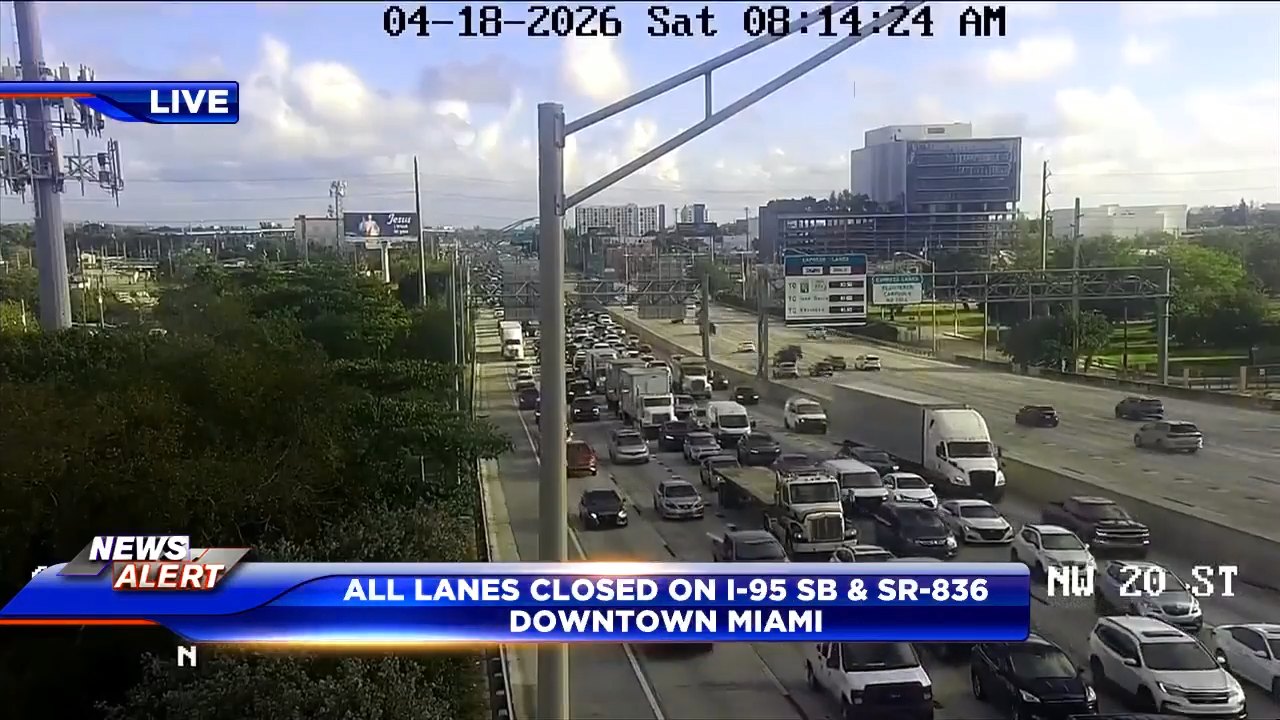
– Confirmed in initial local reporting (WSVN 7News): all I-95 southbound lanes at SR 836 were briefly shut down and later reopened; traffic cameras showed heavy backups; Miami Fire Rescue identified a 23-year-old motorcyclist transported to Ryder Trauma Center in stable condition at the time of transport.
– Reported later by other outlets (including CBS Miami): the crash involved a wrong-way driver and a multi-vehicle sequence.
– Still developing in early coverage: the full sequence of impacts and any final medical outcomes may be updated as agencies complete notifications and investigators finalize findings.
Overview of the I-95 Accident
A serious crash on Interstate 95 near State Road 836 created what officials and local coverage described as a massive backup before traffic was eventually allowed to move again.
The location matters: the I-95 and SR 836 connection is a key gateway between north-south travel on I-95 and east-west movement toward downtown Miami and the broader expressway network. When an incident forces a full lane closure at a major interchange like this—especially during a weekday morning commute—the impact can spread quickly beyond the immediate crash scene.
Local reporting indicated the shutdown was brief in the sense that lanes were later reopened, but the congestion captured on traffic cameras underscored how quickly gridlock can form when a high-volume corridor loses capacity. Even after lanes reopen, backups can persist as traffic “unwinds” and drivers merge back into normal flow.
Officials from the City of Miami Fire Rescue confirmed that the crash involved a motorcycle rider, and that the rider—identified as 23 years old—was transported to Ryder Trauma Center in stable condition, according to the initial official update cited in local coverage. Subsequent reporting from other outlets described the incident as more complex, involving a wrong-way driver and multiple vehicles, highlighting how early information can evolve as investigators and agencies piece together what happened.
For commuters, visitors, and anyone trying to reach downtown or connect to other expressways, the incident served as a reminder of how a single crash at a chokepoint can disrupt travel across a wide area in a matter of minutes.
Dolphin Expressway Disruption Impacts
SR 836 (the Dolphin Expressway) is one of the main east–west routes feeding into the I-95 corridor near downtown Miami. That means a disruption here doesn’t just slow one highway—it can quickly spill into multiple connectors and alternates as drivers try to reach downtown, Miami Beach routes, or other expressways.
Details of the Incident
The crash unfolded on I-95 southbound near SR 836 and quickly escalated into a situation that required a full shutdown of the southbound lanes—at least temporarily—so first responders could work safely and traffic could be managed around the scene. Traffic cameras showed long lines of vehicles stacked behind the closure, with several lanes visibly backed up.
While early official information focused on the immediate emergency response and the condition of the injured motorcyclist, later reporting described a multi-vehicle sequence tied to a wrong-way driver. That kind of scenario can create a chaotic scene: multiple points of impact, debris across lanes, and the need for rapid medical care alongside a careful approach to scene safety.
The interchange area near SR 836 is heavily traveled and complex, with drivers making last-second lane changes to connect between routes. When a crash occurs there—especially one involving a motorcycle—responders often have to balance urgent medical needs with the practical reality that traffic must be stopped or diverted to prevent secondary collisions.
The result in this case was a short-term but total interruption of southbound traffic flow, followed by a reopening that allowed vehicles to begin moving again. Even so, the visual evidence from traffic cameras and the description of a “massive backup” indicate that the disruption was significant for the morning commute.
I-95 Crash Response Timeline
Timeline (as described across early and later reports)
– Report comes in: crash reported on I-95 southbound near the SR 836 interchange during the morning commute.
– Scene secured: all southbound lanes are briefly shut down so responders can access the crash area and reduce the risk of secondary collisions.
– Medical response: Miami Fire Rescue transports the 23-year-old motorcyclist to Ryder Trauma Center (initially reported stable at time of transport).
– Investigation/clearance: later reporting describes a wrong-way driver and a multi-vehicle sequence; lanes reopen once vehicles/debris are cleared enough for traffic to move safely.
– After reopening: stop-and-go conditions continue as the queue dissipates.
Time and Location
The crash was reported during the morning commute on a Wednesday, in the southbound lanes of I-95 near the SR 836 interchange in Miami. That timing is important because it coincides with peak traffic volume, when even minor disruptions can cascade into major delays.
The specific reference point—near SR 836—places the incident at a critical junction used by drivers heading toward downtown Miami and other connecting routes. In practical terms, a blockage here doesn’t just affect the immediate stretch of I-95; it can also influence traffic patterns on nearby connectors and alternates as drivers attempt to reroute.
Local coverage described the closure as affecting all southbound lanes, at least briefly. When all lanes are shut down, traffic has nowhere to go, and backups can build rapidly. Traffic cameras documented the congestion, showing multiple lanes of vehicles backed up before the lanes were reopened.
Because the incident occurred at a major interchange, the backup likely extended beyond a single exit ramp or merge area. Later reporting described congestion stretching across multiple exits, illustrating how quickly a bottleneck can expand when a high-capacity roadway is reduced to zero flow.
Emergency Response
Officials from the City of Miami Fire Rescue were among the agencies responding, and the victim—a 23-year-old motorcycle driver—was transported to Ryder Trauma Center in stable condition, according to the initial official statement.
The decision to temporarily close all southbound lanes aligns with standard safety practices at major highway incidents: responders need space to access patients, stage equipment, and protect the scene from oncoming traffic. In a multi-vehicle crash—particularly one later described as involving a wrong-way driver—there can be additional hazards, including debris, disabled vehicles in travel lanes, and the risk of secondary crashes as drivers approach unexpectedly stopped traffic.
Other reports described a broader multi-agency presence, including law enforcement involvement consistent with a serious crash investigation and traffic control. The combination of medical transport, scene management, and investigative needs often determines how long lanes remain closed.
Even after the roadway is reopened, the emergency response phase can have lingering effects: tow operations, cleanup, and the gradual release of backed-up vehicles can keep travel times elevated well beyond the moment the last lane is cleared.
Victim Information
City of Miami Fire Rescue identified the victim as a 23-year-old motorcycle driver. Officials said the rider was taken to Ryder Trauma Center in stable condition.
Motorcycle crashes on high-speed interstates tend to draw immediate concern from responders and the public because riders have less physical protection than occupants of enclosed vehicles. Even when a patient is reported in stable condition, the circumstances of a highway crash—speed, impact forces, and the complexity of multi-vehicle collisions—often require evaluation at a major trauma facility. Ryder Trauma Center is one of the region’s key destinations for serious injuries, and transport there indicates the seriousness with which responders treated the incident.
Subsequent reporting from other outlets described a fatal outcome for the motorcyclist. That contrast underscores a difficult reality in breaking-news situations: early medical status updates reflect a moment in time, while later information may change as injuries are fully assessed and outcomes become known. In the official update cited in local coverage, the rider was reported stable at the time of transport. In this case, the initial official statement emphasized stable condition at the time of transport, while later accounts described the crash as resulting in the rider’s death.
No additional victim identities were provided in the available official summary cited in local reporting. Other reports referenced additional vehicles involved—an SUV and a black car described as traveling the wrong way—but did not provide confirmed details about injuries to other drivers in the same official terms as the motorcyclist’s status.
For the public, the limited confirmed information is typical in the early stages of a major crash investigation, when agencies prioritize medical care, scene safety, and traffic restoration before releasing more complete details.
Initial Status vs Later Outcome
Update context (why early and later reports can differ)
– WSVN 7News reported Miami Fire Rescue’s initial update: the 23-year-old motorcyclist was transported to Ryder Trauma Center in stable condition at the time of transport.
– Later coverage from other outlets (including CBS Miami) described the motorcyclist as having died from injuries.
– In fast-moving incidents, “stable” is a snapshot during transport/hand-off; later outcomes may be reported after hospital evaluation and official confirmation.
Traffic Impact and Delays
The crash’s most immediate public effect was the traffic disruption: all southbound lanes of I-95 near SR 836 were briefly shut down, and traffic cameras showed several lanes of backed-up vehicles. The closure occurred during the morning commute, amplifying the impact.
When a major interstate is fully blocked at a key interchange, congestion can spread in multiple directions. Drivers approaching the closure have to slow or stop, and the resulting queue can extend for miles. At the same time, drivers who divert to alternate routes can overload nearby corridors, shifting the congestion rather than eliminating it.
Later reporting described ripple effects onto other routes commonly used as alternates, including SR 112 and I-195, as drivers sought ways around the blockage. Authorities also advised a detour strategy for drivers coming from Broward County areas such as Miami Gardens and Hollywood, recommending Route 441 onto 27th Avenue to bypass the affected area.
Even after lanes reopen, delays can persist. The release of a long queue is gradual, and merging behavior near interchanges can remain unstable as drivers re-enter the mainline. The result is often a “shadow” of congestion that lingers well beyond the official end of the closure.
For visitors unfamiliar with Miami’s highway network, incidents like this can be especially disruptive, because navigation apps may reroute drivers onto surface streets that are already busy or less intuitive. For residents, the crash was another example of how quickly a single incident can paralyze a critical corridor.
Extent of Traffic Backups
Traffic cameras showed multiple lanes of backed-up traffic. Other reporting described backups stretching for miles, with congestion extending from exit 7 (SR-934/NW 79 Street/NW 81 Street) to exit 3A (SR 836). That span illustrates how quickly a queue can grow when a high-volume roadway is reduced to a full stop.
The interchange’s role as a connector to downtown and other expressways likely contributed to the intensity of the backup. Vehicles that would normally disperse across ramps and connectors instead became trapped behind the closure, while incoming traffic continued to arrive until upstream drivers could divert.
As the backup grew, the risk of secondary incidents typically increases—drivers encounter sudden slowdowns, and stop-and-go conditions can lead to rear-end crashes. That’s one reason agencies often emphasize caution and reduced speed when approaching known congestion points, especially near major interchanges.
The description of a “massive backup” also suggests that the effects were not limited to a single neighborhood. A queue spanning multiple exits can affect travel times for commuters heading to work, deliveries moving through the city, and anyone trying to reach time-sensitive destinations such as flights, appointments, or scheduled events.
| What drivers reported/observed | What it means in practice | Where it showed up in coverage |
|---|---|---|
| All I-95 southbound lanes briefly closed at SR 836 | Zero flow → backups build fast and can stretch across multiple exits | WSVN 7News; later outlet summaries |
| Backups visible on traffic cameras | Congestion was already multi-lane and sustained, not just a single-lane slowdown | WSVN 7News |
| Queue described from Exit 7 (SR-934/NW 79 St/NW 81 St) to Exit 3A (SR 836) | Several-mile span; expect long delays even after reopening | Later reporting (including CBS Miami) |
| Alternates (SR 112, I-195) also slowed | Detours can clog quickly; travel-time savings may shrink as more drivers reroute | Later reporting (including CBS Miami) |
| Suggested bypass: Route 441 → 27th Ave (for some Broward-to-Miami trips) | Earlier diversion can prevent getting trapped in the I-95 queue | Later reporting (including CBS Miami) |
Alternate Routes for Commuters
As the closure and backups developed, alternate routes became a key part of how drivers tried to navigate around the disruption. Later reporting cited increased volume and delays on SR 112 and I-195—two major east-west corridors that often serve as practical alternatives when I-95 is blocked near downtown connections.
Authorities also advised drivers coming from Broward County areas, including Miami Gardens and Hollywood, to use Route 441 onto 27th Avenue to bypass the affected area. That guidance reflects a common strategy during major interstate disruptions: move traffic off the interstate earlier, before vehicles become trapped in the queue, and route them onto a parallel north-south corridor that can reconnect to the destination area.
For drivers already committed to I-95 southbound near the interchange, options can be limited, especially if ramps are congested or if traffic control measures restrict movement near the scene. In those moments, real-time updates—traffic cameras, official alerts, and navigation apps—can help drivers decide whether to stay put or exit at the next available opportunity.
The broader lesson for commuters is that redundancy matters: knowing at least one or two alternate corridors (and understanding that alternates can also clog quickly) can reduce the stress and uncertainty that comes with sudden highway closures.
Cause of the Accident
Initial official information highlighted the fact of the crash and the emergency response, but later reporting described a specific and dangerous cause: a wrong-way driver.
According to those subsequent accounts, a black car entered the southbound lanes of I-95 traveling northbound, clipped an SUV, and then collided head-on with a motorcycle. That sequence—wrong-way entry, a sideswipe or clip with one vehicle, followed by a head-on impact with another—helps explain both the severity of the incident and the need to close all southbound lanes temporarily.
Wrong-way driving incidents are relatively uncommon compared with typical crashes, but they are often among the most severe because they can involve high closing speeds and limited time for other drivers to react. On an interstate, where speeds are higher and traffic volumes are dense, a wrong-way vehicle can create a rapidly evolving hazard across multiple lanes.
The involvement of a motorcycle in the reported sequence is particularly significant. Motorcycles are smaller and less visible than cars and SUVs, and riders have less protection in a collision. In a head-on crash scenario, the consequences can be catastrophic.
How Crash Causes Are Confirmed
How “cause” is typically confirmed in a major highway crash (and why early details can change)
1) Immediate facts first: agencies confirm location, lane status, and medical transport so the public can avoid the area.
2) Scene evidence: vehicle positions, debris fields, skid marks, and damage patterns help establish direction of travel and points of impact.
3) Independent inputs: witness statements, 911 calls, and any available roadway/traffic camera views are compared for consistency.
4) Agency confirmation: transportation or law-enforcement updates may add specifics (like wrong-way travel) once they’re confident it’s supported.
5) Final findings: a completed crash report can refine or correct early narratives.
Response from Emergency Services
The emergency response also included the operational decision to briefly shut down all southbound lanes of I-95 at SR 836. That kind of full closure is disruptive, but it is often necessary when responders need to access patients, manage hazards, and secure a scene that may involve multiple vehicles and debris across travel lanes.
Other reporting described coordination among multiple agencies consistent with a major highway incident, including law enforcement presence for traffic control and investigation. In serious crashes—especially those involving wrong-way driving—law enforcement typically plays a central role in documenting the scene, interviewing witnesses, and reconstructing the sequence of events.
Traffic management is also part of the emergency response. With a major backup forming, responders and transportation officials may use message boards, ramp controls, and detour guidance to reduce the risk of secondary crashes and to keep surface streets from becoming overwhelmed. Even when those measures are not detailed in early reports, the visible result—traffic being stopped, then gradually released—reflects a coordinated effort to restore safe movement as quickly as possible.
The combination of rapid medical transport and lane management illustrates the dual priorities in such incidents: care for the injured and protection of the broader traveling public.
Steps to Restore Traffic Flow
What responders typically have to do before traffic can move again
– Secure the scene: block lanes, create a safe work zone, and prevent secondary crashes.
– Triage and treat: reach patients quickly and coordinate transport.
– Control traffic upstream: slow/stop approaching vehicles and guide drivers away from the hazard.
– Document and investigate: especially in severe or unusual crashes (like wrong-way reports).
– Clear hazards: remove disabled vehicles, debris, and any fluids/cleanup needs.
– Reopen in stages when safe: restore lanes once the travel path is clear and responders can exit safely.
Reopening of Lanes
All southbound lanes of I-95 near SR 836 were briefly shut down after the crash, but they were later reopened, according to local reporting. Traffic cameras showed heavy backups before the reopening, underscoring that the closure—while temporary—had an outsized effect on the morning commute.
Reopening a major interstate after a serious crash is typically a phased process. Even when lanes are technically “open,” traffic does not instantly return to normal. Vehicles must accelerate from a standstill, merge points remain congested, and drivers may continue diverting to alternates based on earlier alerts. The result is often a prolonged period of stop-and-go conditions.
In this case, the reopening marked the end of the immediate shutdown, but not necessarily the end of delays. Other reporting described backups that persisted for hours, reflecting how long it can take for a miles-long queue to dissipate.
For drivers, the reopening is a critical milestone because it restores the primary route, but it also requires caution: the transition from closure to moving traffic can involve sudden lane shifts, emergency vehicles still clearing the shoulder, and residual debris or wet spots from cleanup operations.
The incident also highlights how quickly conditions can change on Miami’s highways. A corridor can go from flowing traffic to a full stop and back again within a relatively short window—yet the consequences for travel time can last much longer than the closure itself.
Requirements Before Full Reopening
Before a full reopening is possible, these are common “must-haves”
– Patients transported and responders no longer working in live lanes
– Wrecked vehicles moved to a safe area (or loaded for towing)
– Debris cleared from travel lanes and shoulders near the crash path
– Any urgent investigation measurements/photos completed
– A safe path for traffic to pass without forcing sudden merges into blocked lanes
– Confirmation that responders can exit the scene without re-blocking lanes
Understanding the Aftermath of the I-95 SR836 Accident
The Importance of Traffic Safety Awareness
The crash near I-95 and SR 836 underscores two realities of driving in a dense urban highway network: first, that a single incident can disrupt travel across a wide area; and second, that certain crash types—especially wrong-way driving—carry a heightened risk of severe outcomes.
For everyday drivers, safety awareness in the aftermath of a major crash includes recognizing the dangers of sudden congestion. Approaching a backup at highway speeds is a common setup for secondary collisions. Staying alert to brake lights ahead, maintaining safe following distance, and avoiding abrupt lane changes near interchanges are practical behaviors that can reduce risk when traffic conditions deteriorate quickly.
The incident also highlights the vulnerability of motorcyclists in high-speed environments. While the specific circumstances of this crash were extraordinary, the broader point remains: motorcycles share the same lanes and face greater exposure in any collision, making attentiveness and predictable driving especially important around them.
Finally, the value of timely public information—traffic cameras, official updates, and local reporting—was evident in how quickly the public learned about the closure and the backups. In a region where visitors and residents alike rely on highways to reach airports, beaches, and downtown destinations, situational awareness can be the difference between a manageable delay and being stuck for an extended period.
Future Measures to Prevent Similar Incidents
Later reporting attributed the crash to a wrong-way driver, a scenario that transportation agencies and law enforcement have long treated as a high-severity risk. While the available reporting does not detail specific policy actions tied to this incident, it does point to the kinds of measures often discussed when wrong-way crashes occur: improved signage and road markings, and technology-based detection systems that can identify wrong-way vehicles and alert authorities.
The interchange environment near SR 836 is complex, and complexity can contribute to driver confusion—especially for those unfamiliar with the area. That makes clear, visible guidance at ramps and decision points a recurring focus in broader roadway safety discussions.
Public awareness also plays a role. Wrong-way driving is often described in coverage as preventable, and education campaigns are frequently cited as a tool to reduce risk—particularly in areas with heavy tourism and constant inflow of new or unfamiliar drivers.
What this crash ultimately demonstrates is the fragility of a major corridor during peak hours: when something goes wrong at a chokepoint, the effects are immediate and widespread. Prevention, rapid detection, and coordinated response are the three levers that can reduce both the human toll and the region-wide disruption when incidents occur.
Balancing Safety and Traffic Flow
Why agencies may choose a full closure (even when it worsens congestion)
– Full closure can be safer for patients and responders when debris/vehicles span multiple lanes or when there’s a risk of secondary crashes.
– Partial lanes can reduce backups, but it may force responders to work inches from moving traffic and can complicate towing and cleanup.
– The practical compromise is often: close everything briefly to stabilize the scene, then reopen lanes in stages as hazards are removed.
This article reflects publicly available reporting and official statements as of the time of writing. Details in major traffic incidents may change as investigators confirm events and agencies update medical outcomes. If you’re traveling, rely on real-time traffic alerts for the latest lane status and routing.