

Table of Contents
- Miami’s festivals celebrate culture and community in 2023
- The Essence of Miami’s Festival Culture
- Miami-Dade County Youth Fair: A Family Tradition
- Celebrating Latin and Caribbean Heritage: Carnaval Miami and Calle Ocho
- Ultra Music Festival: A Global Electronic Music Hub
- Winter Party Festival: Advocacy Through Celebration
- The Culinary Delight of South Beach Wine & Food Festival
- Art and Cultural Festivals: A Showcase of Diversity
- Art Basel Miami Beach: A Global Art Phenomenon
- CultureFest 305: Celebrating Multiculturalism
- Asian Culture Festival: A Celebration of Heritage
- The Economic Impact of Miami’s Festivals
- Community Engagement Through Festivals
- Exploring Miami’s Festival Landscape: A Cultural Mosaic
Miami’s festivals celebrate culture and community in 2023
Miami’s 2023 Festival Highlights
These highlights focus on Miami’s 2023 festival season—events that turn everyday public spaces (streets, parks, fairgrounds) into shared stages. Details like attendance and economic figures are reported/estimated by the sources cited later, so think of them as directional context rather than exact counts.
- Miami’s festivals double as social spaces—places where traditions are preserved and newcomers are welcomed.
- From the Miami-Dade County Youth Fair to Calle Ocho, participation is the point: streets, parks, and fairgrounds become shared stages.
- Ultra Music Festival shows Miami’s global pull, while still reshaping local routines—from hotels to transit.
- Winter Party Festival pairs celebration with advocacy, reflecting a wider shift toward inclusion and community support.
- Food and art festivals—from SOBEWFF to Art Basel—turn taste and creativity into a common language across cultures.
The Essence of Miami’s Festival Culture
Four Elements of Miami Festivals
A simple way to understand Miami’s festival culture is through four repeating elements:
– Participation: attendees aren’t just spectators—streets, parks, and fairgrounds invite movement, play, and interaction.
– Place: familiar locations (Little Havana streets, downtown, public parks) temporarily become “venues.”
– Identity: festivals make heritage visible through music, food, dance, and art.
– Continuity: annual traditions (like the Youth Fair and long-running cultural festivals) create shared memory in a fast-changing city.
Miami’s identity is often reduced to beaches, nightlife, and a fast-growing skyline. But the city’s deeper rhythm is set by gatherings that repeatedly pull residents and visitors into the same public spaces—festivals that blend culture, food, and music. In 2023, that rhythm remained one of Miami’s defining features: a steady calendar of events that functioned as more than entertainment.
These festivals operate as social infrastructure. They create temporary places where communities intersect, traditions are practiced in public, and newcomers can step into the city’s collective life without needing an invitation. In a region shaped by movement—migration, tourism, and constant change—festivals act as anchors. They are anticipated, discussed, and remembered, becoming part of Miami’s living memory.
What stands out is how often Miami’s festivals prioritize participation over passive viewing. Streets become venues. Parks become cultural showcases. Fairgrounds become intergenerational meeting points. The result is a city where public space can be transformed into a shared cultural arena, even if only for a weekend.
Taken together, Miami’s 2023 festival scene reflected the city’s multicultural makeup and openness to global influences. Neighborhood-scale events and international spectacles coexisted, each reinforcing the same underlying theme: Miami thrives on shared experiences, and it keeps reinventing itself through the act of gathering.
Miami-Dade County Youth Fair: A Family Tradition
Youth Fair Day Planning Tips
If you’re planning a Youth Fair day with kids (or a group), these tend to make the experience smoother:
– Before you go: check the fair’s operating days/hours and any special-event nights (crowds can vary a lot).
– Timing: arrive early if you want shorter ride lines; go later if you’re prioritizing lights/atmosphere.
– Budget checkpoints: decide ahead of time how you’ll handle rides/games/food so spending doesn’t surprise you.
– Comfort: wear closed-toe shoes for lots of walking; bring water and a light layer for evening breezes.
– “Must-do” loop: pick 1–2 anchor activities (rides, agricultural exhibits, a show) and let the rest be wandering.
For many South Florida families, the Miami-Dade County Youth Fair is less a single outing than a seasonal ritual. Running for several weeks each spring, the fair draws families, students, and visitors from across the region, offering a familiar structure that still feels fresh year after year: rides, skill-based games, food stalls, agricultural exhibits, and live performances.
The fair’s appeal is partly its accessibility. Unlike ticketed, high-production festivals that can feel exclusive, the Youth Fair is built around simple, interactive entertainment—exactly the kind that encourages families to stay for hours, moving from one attraction to the next. Children get their first taste of fair games and rides; adults revisit traditions they remember from their own childhoods. That intergenerational loop is central to the fair’s staying power.
In a city often described as “digital-first,” the Youth Fair’s enduring popularity is a reminder that hands-on, low-pressure fun still resonates. The fair is not about curating an image; it’s about creating a shared space where people can wander, compete, snack, and watch performances without needing to plan every minute.
It also underscores something easy to miss in a major metro area: large cities still value communal gathering spaces. The Youth Fair functions as a civic pause—an annual moment when routines shift and families make room for a tradition that is both local and widely shared across the region.
Celebrating Latin and Caribbean Heritage: Carnaval Miami and Calle Ocho
| Feature | Carnaval Miami (broader celebration) | Calle Ocho Music Festival (signature street day) |
|---|---|---|
| Primary vibe | Multi-event cultural celebration rooted in Little Havana | High-energy, open-air street festival experience |
| Best for | Visitors who want a wider slice of programming (music, food, community events) | People who want the “streets become the venue” feeling in one concentrated day |
| Participation style | Mix of scheduled events and public gatherings | Street-level immersion—moving with the crowd is part of the event |
| Accessibility | Varies by event | Noted for being highly accessible because the streets become the venue |
| What to plan for | Check which events you’re attending and where they’re staged | Expect dense crowds; plan meeting points and a transit strategy |
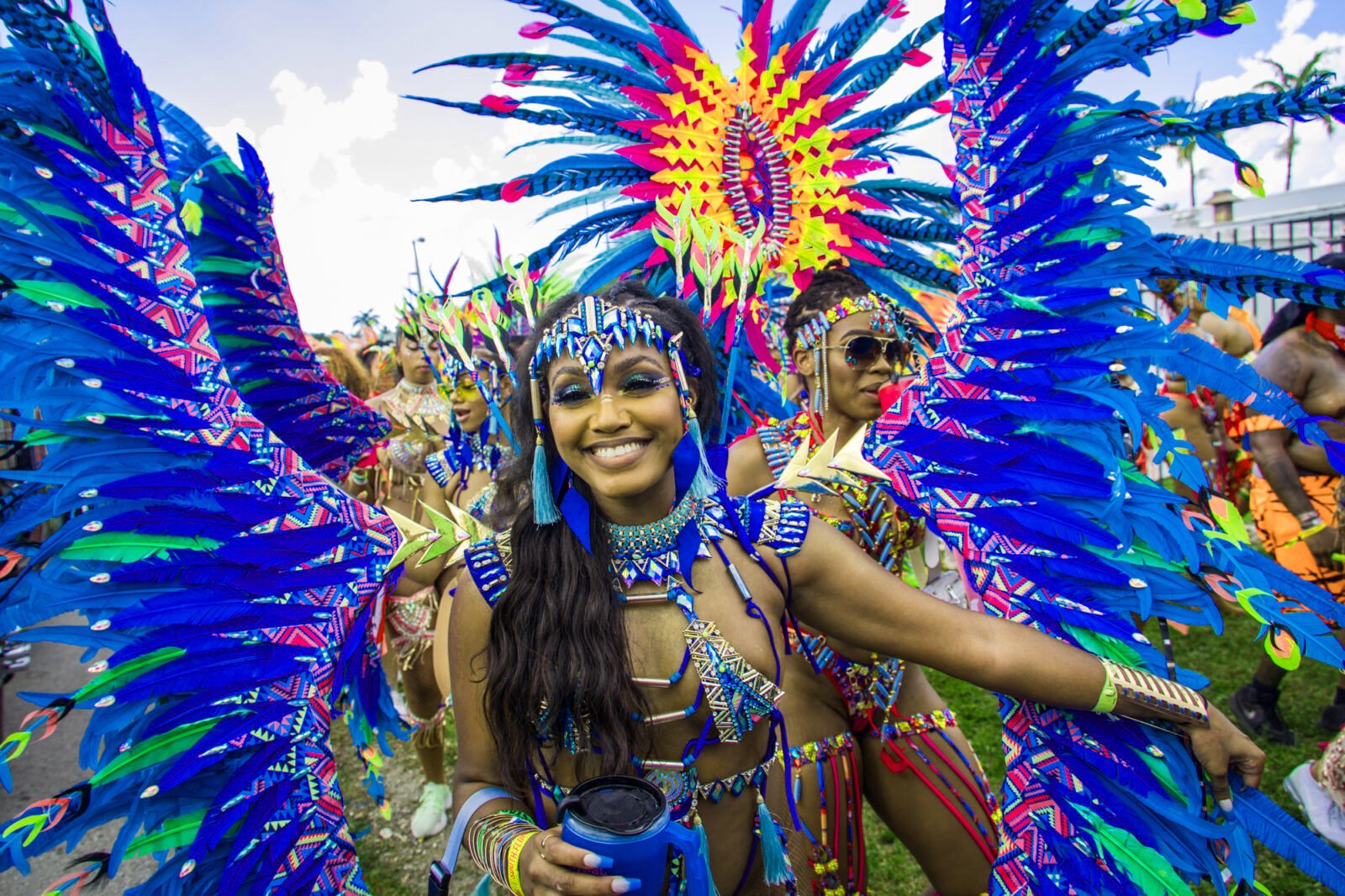
Few events capture Miami’s cultural heartbeat as clearly as Carnaval Miami and the Calle Ocho Music Festival. Centered in Little Havana, the celebration brings Latin and Caribbean heritage into public view through music, dance, street food, and open-air performances—an expression of identity that is as much lived as it is presented.
Calle Ocho’s significance is rooted in how it uses the city itself as the venue. The streets become the stage, and that shift matters: it lowers barriers between performers and attendees and makes participation feel natural. People don’t just watch; they contribute to the atmosphere by showing up, moving through the crowd, responding to music, and turning everyday public space into a shared cultural arena.
That street-level engagement reflects a broader pattern in Miami’s festival culture. The city repeatedly demonstrates that public space can be temporarily reimagined—closed to cars, opened to community, and filled with sound, food, and movement. In Little Havana, that transformation carries added weight because it centers heritage in a way that is visible and communal.
Carnaval Miami and Calle Ocho also highlight how festivals preserve tradition while welcoming newcomers. Visitors can experience music and dance styles in an open setting, while longtime residents see familiar cultural expressions affirmed in the heart of the city. The result is a celebration that feels both specific—rooted in Latin and Caribbean heritage—and broadly inviting.
In 2023, the event continued to illustrate why Miami’s festival calendar is more than a list of attractions. It’s a public expression of who the city is, and how it chooses to gather.
Ultra Music Festival: A Global Electronic Music Hub
Ultra: Upsides and Trade-Offs
Ultra’s appeal comes with real trade-offs—worth planning around:
– Upside: massive production value (pyrotechnics/lasers), a global crowd, and a “Miami as international hub” atmosphere.
– Trade-offs for attendees: long lines, dense crowds, higher-priced nearby food/drinks, and a louder/late-night environment.
– Trade-offs for locals: downtown congestion and routine disruption (transit patterns, road closures, and packed hospitality corridors).
– Practical decision tip: if you want the music-week energy without the main-festival density, Miami Music Week events can be an alternative path.
Ultra Music Festival sits at the other end of Miami’s cultural spectrum: an internationally recognized electronic music event held in downtown Miami, built around large-scale production and global audiences. In 2023, it continued to draw major crowds—reported at over 70,000 attendees—along with the signature sensory overload of modern EDM festivals: pyrotechnics, confetti, and laser shows. (Attendance figure reported in event roundups such as Miami Guide.)
Yet Ultra’s impact is not confined to the festival grounds. Its scale makes it a citywide event in practice. Hotels and restaurants adjust to the influx of visitors, and public transit systems adapt to the surge in movement. For locals, Ultra is not only something happening “somewhere downtown”; it’s something that changes the city’s everyday rhythms for its duration.
That dynamic captures a key tension—and a key strength—of Miami’s festival culture. Ultra is global in brand and reach, drawing attendees from dozens of countries and reinforcing Miami’s reputation as an international hub. At the same time, it is deeply local in consequence. The city becomes part of the experience, not merely the backdrop.
Ultra also sits within a broader ecosystem of electronic music activity. Miami Music Week, which complements Ultra, turns the city into a dance music marathon, with a dense schedule of parties and performances that attracts hundreds of thousands of visitors. Together, these events underline Miami’s role as a meeting point for global nightlife and music culture.
In 2023, Ultra’s continued prominence showed how Miami can host a festival with worldwide pull while still absorbing it into the city’s identity—an example of how large-scale events can coexist with daily life, even as they temporarily reshape it.
Winter Party Festival: Advocacy Through Celebration
Celebrating Music and Inclusion
What “advocacy through celebration” looks like here (as described in event coverage):
– Purpose: music-driven programming paired with support for nonprofit initiatives and LGBTQ+ causes.
– Community mechanism: the festival’s identity is shaped not only by entertainment, but by who it centers and what it supports.
– Why it matters in Miami’s calendar: it reflects a broader shift toward inclusion and community support as part of the festival experience.
Winter Party Festival adds another dimension to Miami’s event landscape by blending celebration with advocacy. Set to happen in February, it is known for music-driven programming and a strong community focus—an atmosphere designed for enjoyment, but tied to a broader purpose.
What distinguishes Winter Party within Miami’s crowded festival calendar is its explicit connection to nonprofit initiatives and LGBTQ+ causes. That combination reflects a wider trend in the city’s festivals: events increasingly function as platforms for awareness, inclusion, and community support, not just as entertainment.
In practical terms, the festival demonstrates how celebration can coexist with responsibility. The music and social energy are central, but the event’s identity is also shaped by what it supports and who it centers. In a city defined by diversity, that matters—because it frames the festival as a space where community is not only present, but affirmed.
Winter Party also illustrates how Miami’s festivals can create belonging through shared experience. For attendees, the draw is not only the lineup or the setting; it’s the sense of being part of something collective, where enjoyment and solidarity are intertwined.
In 2023’s broader context, Winter Party’s model—festive, community-driven, and tied to social purpose—fit neatly into Miami’s evolving understanding of what a festival can be. It’s not just a party. It’s a gathering that signals values, builds networks, and turns public celebration into a form of civic participation.
The Culinary Delight of South Beach Wine & Food Festival
Low-Stress Festival Planning Steps
A low-stress way to plan SOBEWFF (especially if you’re new to multi-day food festivals):
1) Pick your “anchor” events first: one big tasting or demo per day is often enough.
2) Build in buffers: leave time between events for walking, lines, and resets.
3) Pace intentionally: alternate richer tastings with lighter bites and water so you don’t burn out early.
4) Decide your goal: celebrity-chef moments vs discovering new flavors—your schedule changes depending on which you prioritize.
5) End with something simple: a final, low-key stop helps the day feel complete without overbooking.
Food is one of Miami’s most consistent cultural languages, and the South Beach Wine & Food Festival (SOBEWFF) elevates that language into a multi-day celebration. Built around chefs, tastings, and culinary demonstrations, the festival frames eating not as a private act but as a shared experience—one that can connect strangers as quickly as it connects friends.
SOBEWFF is often described as upscale in presentation, but it still aligns with Miami’s communal ethos. The point is not only to showcase culinary talent; it’s to create spaces where people gather around flavor, conversation, and the simple act of trying something together. In a city where cultures overlap daily, food becomes a practical bridge—an easy way to participate even if you don’t share a first language or a background.
The festival’s programming has included celebrity chefs such as Rachel Ray and Guy Fieri, adding star power that draws visitors from beyond South Florida. But the event’s significance is also philanthropic: proceeds benefit Florida International University’s Hospitality & Tourism Management school, linking the festival to education and the local hospitality pipeline.
That connection matters in Miami, where tourism and dining are not side industries but central parts of the city’s economy and identity. The region’s culinary scene is vast—Miami is home to more than 8,720 restaurants—so a festival that celebrates food is also, indirectly, a celebration of the city’s workforce and its everyday creativity. (Restaurant count and creative-industry context are cited in Beacon Council’s creative industries overview.)
In 2023, SOBEWFF continued to show how a festival can be both a showcase and a gathering place: a curated experience that still relies on the most basic communal act Miami knows well—sharing a meal.
Art and Cultural Festivals: A Showcase of Diversity
| Event | What it spotlights | Setting / access | 2023 detail noted in sources |
|---|---|---|---|
| Art Basel Miami Beach | Global galleries, collectors, and art-market momentum | Major international art fair | Reports highlighted robust sales across market segments and noted David Zwirner’s public disclosure of private sales (reported in Altoo’s 2023 review). |
| CultureFest 305 | Miami’s multicultural folklife (music, dance, food) | Free festival hosted by HistoryMiami Museum | Program included Afro-Cuban batá drumming, mariachi, dances from Argentina and Serbia, plus Haitian cuisine (HistoryMiami Museum event listing). |
| Asian Culture Festival | Asian heritage, family participation, cultural exchange | Tropical Park | Marked its 30th annual edition; supported by groups including the Thai-American Association of South Florida and the Miami-Dade County Asian-American Advisory Board (as reported in coverage such as Masala Eats Miami). |
Miami’s festival culture is often associated with music and nightlife, but the city’s art and cultural events reveal a different kind of energy: slower, more reflective, and deeply tied to heritage. In 2023, art fairs and folklife festivals helped define Miami as a place where global creativity and local tradition can share the same calendar—and sometimes the same audience.
These events also highlight Miami’s multicultural makeup in a direct way. Rather than presenting “culture” as a single theme, they stage many cultures side by side: different musical traditions, cuisines, dance forms, and visual languages. The result is less a melting pot than a mosaic—distinct pieces that remain recognizable while forming a larger picture of the city.
Art and cultural festivals also serve a civic function. They create public-facing moments for communities to be seen and heard, and they offer residents a way to experience the city’s diversity without needing to travel far. In a place shaped by global influences, that kind of local access matters.
In 2023, three events captured this range particularly well: Art Basel Miami Beach, CultureFest 305, and the Asian Culture Festival. Together, they show how Miami’s cultural calendar can move from high-end global commerce to free, family-friendly folklife celebrations—without losing the thread that connects them: participation, exchange, and shared space.
Art Basel Miami Beach: A Global Art Phenomenon
Art Basel Miami Beach remained one of the world’s most prestigious art fairs in 2023, reinforcing Miami’s position as a global cultural meeting point. The event drew galleries, collectors, and art enthusiasts from around the world, functioning as both a showcase of creativity and a marketplace where commerce and culture intersect.
Reports from the 2023 edition pointed to robust sales across diverse market segments, spanning works by 20th-century luminaries as well as contemporary and emerging artists. That breadth matters because it signals more than a single trend: it suggests a fair that continues to serve multiple layers of the art world at once, from established names to newer voices.
One widely noted moment was David Zwirner’s decision to disclose private sales at the fair, a move that challenged traditional norms and pushed toward greater transparency in art-market transactions. In an industry often defined by discretion, the gesture stood out as a signal—however limited—of how the market’s culture can shift in public view.
Beyond sales, Art Basel’s influence is also conversational. Dealers and collectors use the fair to exchange ideas and gauge momentum, and ambitious presentations can shape what gets attention in the months that follow. In that sense, Miami is not merely hosting an event; it is temporarily hosting a global forum.
In 2023, Art Basel again demonstrated how Miami’s festival culture can operate at the highest international level while still feeding into the city’s broader identity as a place where global influences arrive, mix, and leave a mark.
CultureFest 305: Celebrating Multiculturalism
CultureFest 305, hosted by the HistoryMiami Museum, offered a different model of cultural celebration: a free folklife festival designed to immerse attendees in the city’s diversity through sound, movement, and food. Rather than focusing on a single tradition, the event presented Miami as it is lived—multi-voiced, layered, and constantly in conversation with itself.
The 2023 program reflected that approach. Performances and activities included Afro-Cuban batá drumming, mariachi music, and dances from Argentina and Serbia. Haitian cuisine was part of the experience, alongside interactive activities intended for all ages. The mix was not accidental; it was the point, a curated reminder that Miami’s cultural identity is built from many distinct communities.
Because the festival is free, it also functions as a low-barrier entry into cultural exploration. Families can attend without committing to a ticketed experience, and visitors can move between performances with the casual openness of a neighborhood gathering. That accessibility aligns with one of Miami’s strongest festival traits: the ability to turn public-facing events into shared civic space.
CultureFest 305 also underscores the role of institutions in festival culture. By hosting a folklife festival, a museum becomes not only a place to view history but a place to experience living culture—something performed, cooked, and practiced in real time.
In 2023, CultureFest 305 stood as a clear example of how Miami’s festivals can celebrate multiculturalism without flattening it, giving different traditions room to be distinct while still belonging to the same citywide story.
Asian Culture Festival: A Celebration of Heritage
The 30th Annual Asian Culture Festival, held at Tropical Park, marked a milestone year for an event built around heritage, family participation, and cultural exchange. In 2023, it showcased Asian art, cuisine, and performances, drawing families and cultural enthusiasts from across Miami.
The festival’s longevity—reaching its 30th annual edition—signals sustained community investment. It suggests an audience that returns year after year, and organizers who have maintained the event as a consistent platform for cultural visibility. In a city where new events appear constantly, that kind of continuity is its own statement.
Sponsorship and support also reflected community structure. The festival was backed by organizations including the Thai-American Association of South Florida and the Miami-Dade County Asian-American Advisory Board, reinforcing that it is not simply a commercial event but a community-rooted one.
As with other major Miami festivals, the Asian Culture Festival’s strength lies in how it invites participation. Food and performance create immediate entry points: attendees can taste, watch, listen, and learn without needing specialized knowledge. That makes the festival both celebratory and educational, offering cultural exchange in a setting that feels welcoming rather than formal.
In 2023, the Asian Culture Festival added to Miami’s broader cultural mosaic by highlighting heritage in a public park setting—an example of how the city’s festival culture can be both specific in focus and inclusive in spirit.
The Economic Impact of Miami’s Festivals
Miami Festivals’ Economic Impact
A few widely cited indicators help explain why festivals matter economically in Miami (figures are estimates reported in the Beacon Council’s creative-industries overview):
– ~$2.1B in local economic activity attributed to creative industries (including festivals).
– ~31,500 jobs supported by those creative industries.
– An estimated ~$39 returned for every $1 invested in the arts.
These figures describe the broader arts/creative ecosystem rather than any single festival’s balance sheet.
Miami’s festivals are cultural events, but they are also economic engines—especially in a city where tourism, hospitality, and creative industries are tightly linked. Large gatherings reshape local routines in visible ways: hotels fill, restaurants extend hours, and public transit systems adjust to accommodate surges in visitors. Ultra Music Festival is a clear example of this citywide effect, with downtown infrastructure and businesses adapting to the influx.
Beyond these immediate shifts, Miami’s broader creative economy provides context for why festivals matter financially. The city’s creative industries—including festivals—generate approximately $2.1 billion in local economic activity and employ over 31,500 individuals. That scale suggests that cultural events are not peripheral; they are part of the region’s employment base and business ecosystem.
Investment in arts and culture is also framed as high-return. For every dollar invested in the arts, an estimated $39 is returned, underscoring how cultural funding can ripple outward into spending, jobs, and related services. While that figure is not tied to a single festival, it helps explain why Miami’s event calendar is often treated as an asset rather than a luxury.
Major festivals also reinforce Miami’s global brand. Art Basel Miami Beach draws international collectors and galleries; Ultra draws attendees from dozens of countries. These visitors don’t just attend an event—they book rooms, dine out, and move through the city, spreading spending across multiple sectors.
Even Miami’s culinary identity has measurable scale. With more than 8,720 restaurants, the city’s dining scene is a major part of its appeal, and events like the South Beach Wine & Food Festival amplify that draw while also supporting FIU’s Hospitality & Tourism Management school through festival proceeds.
In 2023, Miami’s festival economy was best understood as layered: direct visitor spending, indirect support for local businesses, and a longer-term boost to the city’s reputation as a global cultural destination.
Community Engagement Through Festivals
Community-First Festival Participation
How to engage with Miami festivals in a way that supports the community (and avoids common friction points):
1) Choose your “participation lane”: volunteer, attend a cultural demo/performance, or prioritize local vendors.
2) Plan your arrival/exit: big events can reshape traffic and transit—pick a meeting point and a backup route.
3) Spend intentionally: even one purchase from a local food stall or maker helps keep festivals community-rooted.
4) Practice crowd basics: hydrate, take breaks, and keep your group’s check-in plan simple.
5) Carry it forward: follow the hosting organizations (museums, cultural boards, nonprofits) so the festival becomes a year-round connection.
Miami’s festival culture works because it is built on participation. Across very different events—from the Miami-Dade County Youth Fair to Calle Ocho—festivals create temporary spaces where social boundaries soften. People who might not otherwise share the same room, street, or park find themselves in the same crowd, responding to the same music, food, or spectacle.
That engagement is often physical and immediate. The Youth Fair invites hands-on play through rides, games, and exhibits. Calle Ocho turns streets into venues, removing the distance between performer and attendee. Even high-profile events like Ultra, while more structured, still pull the city into the experience by reshaping how people move through downtown and how businesses operate.
Festivals also preserve traditions by practicing them in public. Music, dance, and food are not presented as museum pieces; they are performed and shared in real time. That matters in a multicultural city, where heritage can be both deeply personal and widely visible. Events like CultureFest 305 and the Asian Culture Festival make that visibility accessible, offering interactive activities and family-friendly settings that encourage learning through experience.
A recurring theme is welcome. Miami’s festivals often function as entry points for newcomers—whether new residents or first-time visitors—who can step into the city’s cultural life without needing insider knowledge. The shared nature of the experience does the work of inclusion.
The broader effect is civic. Festivals influence neighborhood routines and become part of local memory. They are anticipated and remembered, creating a sense of continuity in a city defined by change. In that way, festivals are not just events on a calendar; they are mechanisms through which Miami repeatedly reintroduces itself to its own residents.
In 2023, the city’s festival culture continued to show that community engagement is not an add-on. It is the core product—built from shared space, shared attention, and the simple act of gathering.
Exploring Miami’s Festival Landscape: A Cultural Mosaic
Miami’s 2023 festival calendar, taken as a whole, reads like a portrait of the city: multicultural, outward-facing, and grounded in the need to gather. From neighborhood streets in Little Havana to downtown’s global music stages, festivals offered Miami a way to express identity in public—through sound, taste, art, and play.
The most telling detail is not any single headliner or attraction, but the repeated transformation of everyday places into shared arenas. That pattern suggests a city that doesn’t merely host festivals—it uses them to practice community.
The Role of Festivals in Community Building
Miami’s festivals build community by creating temporary spaces for participation. The Youth Fair brings generations together through games, rides, and exhibits. Calle Ocho turns public streets into a shared stage where attendees contribute to the atmosphere. CultureFest 305 and the Asian Culture Festival invite families into cultural exchange through performances, food, and interactive activities.
This kind of community building is not abstract. It is practical: people share space, share attention, and share experiences that become part of local memory. In a city defined by diversity and movement, festivals act as anchors—recurring moments that help residents feel connected to place and to each other.
Economic Contributions of Miami’s Festivals
The economic story of Miami’s festivals is inseparable from the city’s identity as a tourism and hospitality hub. Ultra’s influx affects hotels, restaurants, and transit. Art Basel brings global collectors and galleries. SOBEWFF draws culinary travelers while supporting FIU’s Hospitality & Tourism Management school through proceeds.
Future Trends in Miami’s Festival Scene
Miami’s festival landscape points toward a future where celebration and purpose increasingly overlap. Winter Party Festival’s blend of music-driven programming with support for nonprofit initiatives and LGBTQ+ causes reflects a wider shift: festivals as platforms for inclusion, awareness, and community support.
At the same time, Miami’s continued ability to host both neighborhood-rooted events and globally branded spectacles suggests the city will keep balancing local participation with international pull. If 2023 offered a clear lesson, it’s that Miami’s festival culture remains strongest when it turns public space into shared space—welcoming, participatory, and unmistakably shaped by the city’s multicultural reality.
This overview is written from the perspective of HireDriverMiami.com, where we track Miami and South Florida happenings closely as part of covering local news and helping visitors and residents plan transportation for airport transfers, city tours, and special events.