

Table of Contents
- 1. Audi Revolut F1 Team hosts fan event in Wynwood
- 2. Event Overview: Audi Revolut F1 Team in Wynwood
- 3. Free Access for Fans During Miami Grand Prix Week
- 4. Showcasing the Audi R26 and Its Power Unit
- 5. Live Streaming of Race Sessions at the Event
- 6. Interactive Racing Simulators for Attendees
- 7. Amenities Offered: Food and Drinks
- 8. Event Schedule: April 30 to May 3
- 9. Community Engagement and Cultural Integration
- 10. Impact of the Event on Formula 1 Fan Experience
- 11. Conclusion: A New Era for Formula 1 in Miami
- 11.1 The Impact of Audi’s Engagement Strategy
- 11.2 Looking Ahead: Future of F1 in Urban Settings
This piece was prepared for travelers and locals planning Miami Grand Prix week logistics—especially getting in and out of Wynwood and other event neighborhoods—based on HireDriverMiami.com’s focus on Miami-area transportation and visitor planning.
Audi Revolut F1 Team hosts fan event in Wynwood
Audi Revolut Fan Hub Miami
– What it is: A free, public Audi Revolut F1 Team fan hub during Miami Grand Prix week.
– Where: MAPS Backlot in Wynwood (an open-air venue used for pop-ups and events).
– Why it matters: It gives fans a city-based place to watch sessions, see the Audi R26 show car, and try interactive experiences—without needing a track ticket.
– What this recap is based on: On-the-ground details and quotes from WSVN 7News’ Deco Drive segment, plus publicly listed programming details from official/partner event pages.
- Audi Revolut F1 Team brought a free, public fan experience to Wynwood during Miami Grand Prix week.
- The hub at MAPS Backlot featured the show car Audi R26, plus an interactive “Mission Control Wall.”
- Fans could watch live-streamed sessions from FP1 through Sunday’s race and try racing simulators.
- Food, drinks, music, and partner activations (including a Gillette barber corner) rounded out the venue vibe.
Event Overview: Audi Revolut F1 Team in Wynwood
If you thought Miami Grand Prix week was confined to the circuit, Audi Revolut F1 Team made a clear counterpoint in Wynwood: the sport’s energy can live in the city, in public, and at street level.
Details and quotes in this recap are drawn from WSVN 7News’ Deco Drive coverage of the Audi Revolut F1 Team Miami experience at MAPS Backlot in Wynwood. The team’s Miami activation centered on an open-air venue in the heart of Wynwood, where fans could drop in and experience a curated slice of Formula 1 culture without the velvet-rope feel that often surrounds the paddock.
To keep the sourcing clear: the on-site quotes, attendee reactions, and food callouts below come from the WSVN segment, while programming items like DJ “Sundowner” sessions, art elements, and the broader activation listings have also been described on official/partner event pages (including Audi F1’s Miami activations page and Wynwood BID’s race-week lineup).
The tone was set by the team itself: Formula 1 can be “very exclusive,” an Audi Revolut F1 Team employee said on-site, and the goal in Wynwood was to “get access to more people.” That intent shaped the programming—watching sessions together, hands-on interactive elements, and a festival-like atmosphere that matched Wynwood’s reputation as Miami’s art district.
The experience was designed to appeal to multiple kinds of visitors. Die-hard fans could follow the weekend’s on-track narrative in real time and compete for prizes. Casual visitors could come for the vibe—music, food, and a social setting that doesn’t require deep knowledge of tyre strategy to enjoy. And for those who simply wanted a memorable Miami moment, the event leaned into the city’s strengths: design, nightlife energy, and a neighborhood known for creative spectacle.
Wynwood was not a random backdrop. Audi’s choice aligned the brand’s emphasis on innovation and design with a district that’s built its identity on visual culture. The result was an activation that looked and felt like Miami—while still keeping the sport at the center.
Free Access for Fans During Miami Grand Prix Week
Free Entry, Broader Access
How “free entry” changes the experience (and who it helps most)
– If you’re not going to the track: This becomes your “race-week base” for live sessions, atmosphere, and photos—without ticket tiers.
– If you are going to the track: It’s a convenient add-on for sessions you might miss (or for meeting friends before/after), especially when Miami traffic makes hopping neighborhoods a real factor.
– If you’re traveling with mixed-interest groups: The car display + music + food + simulators gives non-die-hard fans a reason to come along.
– If you’re a local: It’s a low-commitment way to sample F1 culture in a neighborhood you already visit.
The most consequential detail of Audi Revolut F1 Team’s Wynwood stop wasn’t a piece of hardware or a celebrity appearance—it was the price of entry: free. In a sport where access is often defined by ticket tiers, hospitality packages, and credentialed zones, Audi’s public-facing approach stood out as a deliberate attempt to widen the funnel.
On-site, the team framed the decision plainly: the activation was meant to make Formula 1 feel less exclusive. That matters in Miami, where Grand Prix week is as much a citywide cultural moment as it is a race weekend. By placing a no-cost experience in Wynwood, Audi effectively created an alternative gathering point for fans who may not be attending the race—or who want more F1 atmosphere beyond the track.
Free access also changes the social mix. It invites the “significant others” who might not buy a race ticket but will happily join a watch party with music and food. It brings in locals who are curious about the sport but not yet committed. And it gives traveling fans another stop that doesn’t compete with their budget for the main event.
The Wynwood location helped make that openness practical. MAPS Backlot sits in a walkable neighborhood that already draws crowds for art, dining, and nightlife. In other words, Audi didn’t ask people to go out of their way; it embedded the experience where people already go during a big Miami week.
And the team didn’t limit the offer to a single day. The activation ran through race weekend, reinforcing the idea that this wasn’t a one-off photo op—it was a sustained public hub designed to keep pace with the Grand Prix schedule.
Showcasing the Audi R26 and Its Power Unit
| What you’ll see at the hub | What it signals (in plain English) | Why fans care on-site |
|---|---|---|
| Audi R26 show car | A tangible “face” of the project—design, branding, and race-car proportions up close | Easy photo anchor; a reason to stop even if you’re not watching a session |
| “Show version” of the track car (as described on-site) | This is meant to connect the pop-up to the real racing program, not just a generic display | Makes the activation feel tied to the weekend’s story, not separate from it |
| Audi-built power unit (called out by team staff) | Positions Audi as a factory-style effort with in-house technical ambition | Helps newcomers understand why Audi’s entry is a big deal in F1 terms |
| Up-close details (bodywork, stance, livery) | F1 is often seen from far away; here it’s about proximity | You can actually study the car rather than catching a blur at speed |
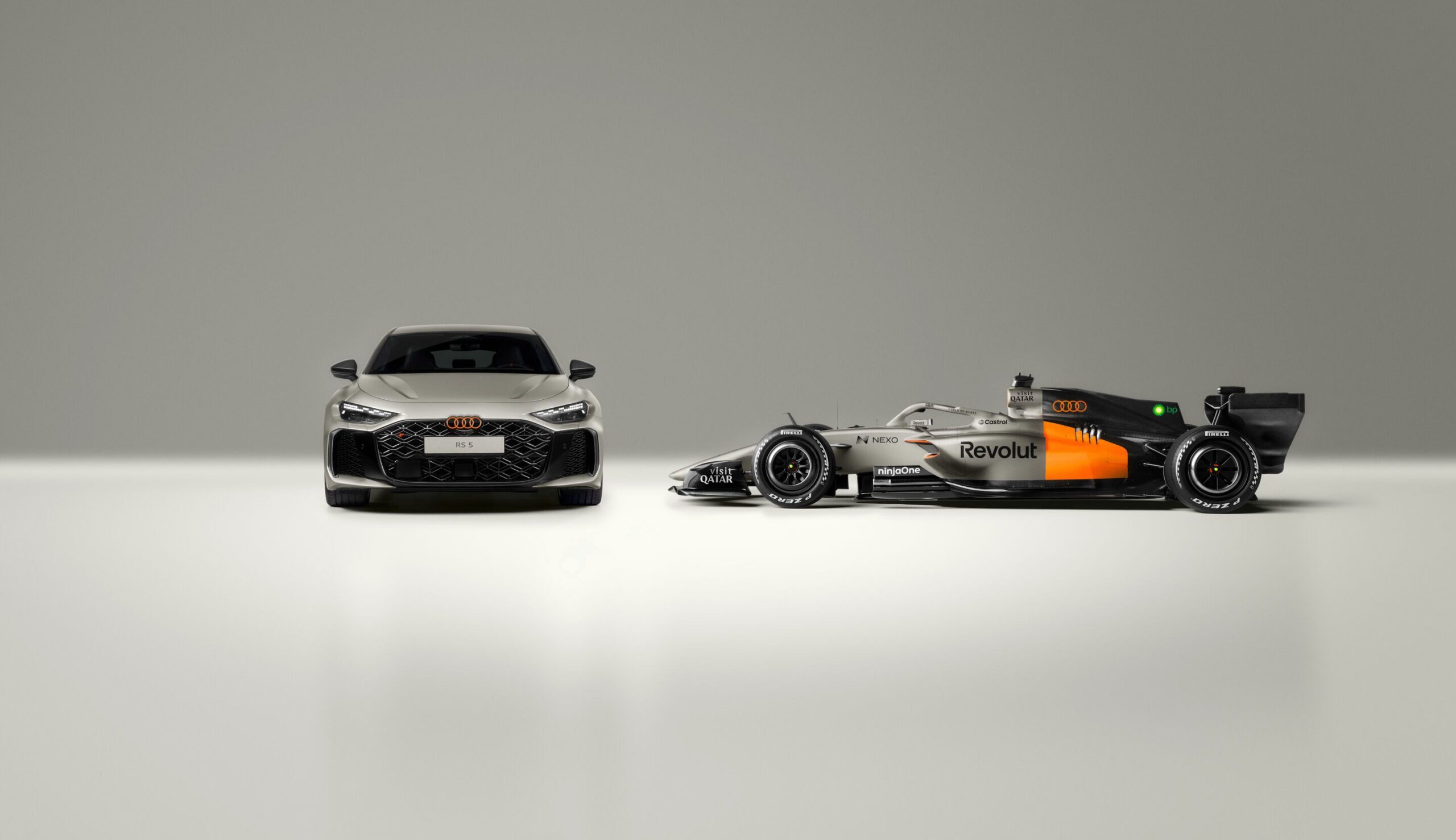
At the center of the Wynwood experience was a piece of eye candy with real strategic meaning: the Audi R26 show car. For fans, it served as the visual anchor—something to stand next to, photograph, and study up close. For Audi, it was a statement of intent, tying the brand’s off-track accessibility to its on-track ambitions.
An Audi Revolut F1 Team employee described the display as “the show version of one that’s going to be on the track,” and emphasized what makes Audi’s project distinctive: “Audi built its own power unit and everything.” In Formula 1 terms, that’s a major identity marker. Not every team is a factory operation, and Audi positioned itself as one of the few.
That factory-team framing matters because it connects the Wynwood activation to the deeper narrative of Audi’s entry into the sport. The Miami Grand Prix is part of the team’s first full season campaign, and the off-track experience functioned as a public-facing introduction: this is who we are, this is what we’re building, and this is how we want you to engage with it.
The R26 display also worked as a bridge between the sport’s technical mystique and fan curiosity. Even without a deep engineering explainer on-site, the mere presence of the car—paired with the mention of Audi’s in-house power unit—signals that the project is not just branding. It’s a performance program with manufacturing and technical ambition behind it.
In a neighborhood like Wynwood, where design is part of the language, the car’s role as an object matters too. It’s sculpture with purpose—an artifact of speed and precision placed in a district known for visual statements. That contrast is exactly the point: Formula 1 doesn’t have to stay behind barriers to feel special.
Live Streaming of Race Sessions at the Event
MAPS Backlot Watch-Party Plan
Using MAPS Backlot as a watch-party hub (simple game plan)
1. Check the day’s session times before you go (Sprint weekends move fast, and the “big” moment might be earlier than you expect).
2. Arrive 15–30 minutes early for headline sessions (Qualifying/Sprint/Race) if you want a good viewing spot.
3. Pick your “base”: screens first if you’re there to watch; car display/simulators first if you’re there to explore.
4. If you’re chasing the prize: ask staff how the Mission Control Wall scoring works that day and whether there’s a cutoff time for entries.
5. Plan your exit like a local: if you’re ridesharing, set pickup a block or two off the busiest corner to reduce wait time during peak crowds.
Audi’s Wynwood hub wasn’t only about atmosphere; it was built to track the weekend as it unfolded. The team said it would be “live-streaming all the sessions,” turning MAPS Backlot into a communal viewing space for the entire Miami Grand Prix program.
That kind of all-session coverage matters in a Sprint weekend context, where the schedule is dense and storylines develop quickly. Even for fans who attend the race in person, it can be hard to catch every session live—especially when you factor in travel time, traffic, and the sheer logistics of moving around Miami during a major event week. A centralized watch location in Wynwood offers a different kind of convenience: show up, grab a spot, and follow the action with other fans.
The watch-party format also changes how people experience Formula 1. At home, the sport can be solitary—one screen, one couch, one set of reactions. In a public setting, every near-miss, every radio message, every late-braking move becomes a shared moment. That social layer is part of what makes major sports feel like cultural events rather than just broadcasts.
Audi’s approach blended viewing with participation. The live stream wasn’t isolated from the rest of the activation; it sat alongside interactive elements like the Mission Control Wall and the simulators, encouraging fans to move between watching the professionals and trying their own hand at “driving” the Miami circuit virtually.
For visitors who didn’t plan their trip around the race schedule, the live stream also served as an entry point. You could walk in for the vibe and end up learning the rhythm of a Grand Prix weekend—practice, qualifying, and race—simply by being in the space while sessions were on.
In a city that thrives on pop-up culture, Audi essentially created a temporary “public living room” for Formula 1—one that ran from the first practice to the final lap on Sunday.
Interactive Racing Simulators for Attendees
Get More From Each Lap
Simulator tips to get more out of your lap
– Do one “warm-up lap” first: treat it like learning braking points, not setting a time.
– Brake earlier than you think: most first-timers lose it by braking too late, not by turning too little.
– Watch one driver before you go: you’ll pick up where people are crashing (and where they’re gaining time).
– Ask what mode you’re in: if there are realism/assist settings, knowing them helps you compare runs fairly.
– If there’s a line, decide your goal: clean lap, fastest lap, or “don’t hit the wall.”
If there was one feature that consistently pulled crowds in, it was the interactive racing simulators. Audi staff described the pitch simply: visitors could “sit down and have a lap around the Miami circuit with our car.” That promise—drive the track, even virtually—turns passive fandom into something tactile.
Simulators do more than entertain. They translate the sport’s complexity into immediate experience: braking points, corner exits, and the constant tension between speed and control. One attendee joked that if the realism were “turned up all the way,” they’d already be “on the wall,” then confirmed they hadn’t hit it yet—“That’s a win,” came the response, with the playful jab that it might also mean they weren’t going fast enough.
That exchange captures why simulators work so well in public activations. They create instant narratives: the first lap, the first mistake, the first clean sector. They also create spectators. Even people who don’t want to drive often stop to watch others try, because the drama is immediate and relatable.
In the context of Wynwood, the simulators also fit the neighborhood’s interactive, experiential culture. This wasn’t a static museum display; it was something you could do. And because the broader event was free, the simulators became a low-barrier hook for newcomers—especially younger visitors or casual fans who might not be drawn in by technical talk alone.
The simulators complemented the live-streaming setup in a smart way. Watching professionals thread the needle at speed can feel abstract; trying to keep a virtual car out of the wall makes the difficulty real. That feedback loop—watch, try, watch again—deepens appreciation without requiring a lecture.
Ultimately, the simulators served Audi’s bigger goal: making Formula 1 feel less distant. You may not get a paddock pass, but you can still feel, in your hands and reflexes, why the sport commands respect.
Amenities Offered: Food and Drinks
| What was mentioned on-site | What to expect in practice | Why it helps the vibe |
|---|---|---|
| “jamón y queso empanada croqueta” | Snackable, handheld food that works between sessions | Keeps people in the space instead of leaving to eat |
| Tacos (called out as “coming out”) | Crowd-friendly options that are easy to share | Makes it feel like a Wynwood hang, not a sterile promo |
| “Perk margarita” | A named drink people remember and talk about | Turns “watching a session” into a social ritual |
A successful fan hub needs more than screens and branding—it needs reasons to linger. At MAPS Backlot, Audi’s Wynwood experience leaned into hospitality with food and drinks that matched the social, come-and-go rhythm of Grand Prix week.
On the food side, the event highlighted snackable, crowd-friendly options. In coverage from the venue, items mentioned included a “jamón y queso empanada croqueta,” with tacos also called out as part of what was coming out of the kitchen. The point wasn’t fine dining; it was approachable food that fits a watch-party environment—easy to share, easy to eat while standing, and satisfying enough to keep people in the space between sessions.
Drinks played a similar role. A “Perk margarita” was singled out as part of the experience, underscoring how the activation blended motorsport with Miami’s leisure culture. In practical terms, a signature cocktail (or at least a named drink that people talk about) becomes part of the memory: you didn’t just watch practice; you watched practice there, with that drink, in that neighborhood.
Food and beverage also function as social glue. Not everyone arrives at the same time, and not everyone is there for the same reason. Some visitors come for the car display, others for the simulators, others for the vibe. A bar and food counter create a natural meeting point, a place to reset, and a reason to stay through the next streamed session.
Just as importantly, hospitality helps broaden the audience. A partner who isn’t an F1 obsessive might still be happy to join if the setting feels like a fun Wynwood outing rather than a niche sports event. That aligns with the team’s stated goal of widening access and making the sport feel less exclusive.
In a week when Miami is packed with ticketed events, a free hub with solid food and drinks becomes its own kind of value—one that’s measured in time spent, not dollars paid.
Event Schedule: April 30 to May 3
| Date range | What it aligned with | Planning takeaway |
|---|---|---|
| Apr 30 – May 3 | The core Miami Grand Prix week/weekend window | Multiple chances to visit; you don’t have to “get it right” in one day |
| Daily live-streamed sessions (FP1 through Sunday race, per on-site team comments) | The evolving on-track storyline | Each day feels different—practice vs. qualifying/Sprint vs. race day |
| 6 p.m. DJ “Sundowner” sessions (listed in Wynwood race-week programming) | Wynwood’s evening rhythm | A predictable shift from fan zone to nightlife energy |
| Location cue: 24th Street between Fifth and Second avenues (as described on-site) | Wynwood navigation | Helpful for rideshare drop-offs and walking routes |
| Public appearances: Gabriel Bortoleto (Thu evening), Mattia Binotto (Fri evening) | Peak moments for fans | If you’re choosing one day, these are natural anchors |
Audi Revolut F1 Team’s Wynwood activation ran from April 30 through May 3, aligning directly with Miami Grand Prix week and the race weekend itself. That multi-day window mattered: it allowed the experience to evolve with the on-track story, and it gave fans multiple chances to visit—whether they were in town for a single night or the full stretch of events.
The venue for the activation was MAPS Backlot in Wynwood. On the ground, the location was described in practical terms for visitors: 24th Street, between Fifth and Second avenues. In a neighborhood where blocks can feel like distinct micro-districts, that kind of specificity helps—especially for out-of-towners navigating Miami by rideshare drop-offs and quick walking routes.
Programming ran through the weekend, with the team emphasizing that fans could watch the race. The schedule also included moments designed to create peaks in attendance and energy. Public appearances were part of the plan, including a Thursday evening appearance by driver Gabriel Bortoleto and a Friday evening appearance by Mattia Binotto, head of the Audi F1 project. Those touchpoints gave fans a reason to pick specific days, not just wander in randomly.
Beyond the headline appearances, the activation’s structure supported repeat visits. Live-streaming meant each day had a different on-track context. Practice days invite experimentation and early impressions; qualifying and Sprint formats raise the stakes; race day becomes the communal finale. A fan could come once and get a taste—or come multiple times and treat the venue like a home base.
Evening energy was also built into the concept. Wynwood is a nightlife neighborhood, and the activation leaned into that rhythm with DJ “Sundowner” sessions starting at 6 p.m. each evening, adding a predictable daily transition from daytime fan zone to nighttime social scene.
In short, April 30 to May 3 wasn’t just a date range—it was a deliberate attempt to mirror the cadence of a Grand Prix weekend inside the city.
Community Engagement and Cultural Integration
Wynwood-Scale Activation Highlights
– Venue scale (as publicly listed): MAPS Backlot has been described in Wynwood race-week listings as a 10,500-square-foot open-air venue, which helps explain how it can function as both a watch hub and a social space.
– Art integration (as described by Audi’s Miami activations): A large-scale mural by Miami-based artist Hoxxoh wrapped the exterior and continued inside, alongside a live poster-printing station producing artwork-inspired designs.
– Neighborhood-fit programming (as listed in Wynwood race-week programming): Daily DJ “Sundowner” sessions starting at 6 p.m. reinforced the “Wynwood at night” feel rather than a track-only atmosphere.
– Citywide touchpoints (as described in Audi’s Miami activations): A Rosetta Bakery co-branded takeover across nine locations (Apr 25–May 3) extended the activation beyond a single address.
Audi’s Wynwood activation wasn’t presented as a generic traveling roadshow. It was shaped to fit Miami—and specifically Wynwood—by integrating art, music, and local partnerships into the Formula 1 framework.
Wynwood’s identity as an art district made it a natural canvas for visual elements. Audi’s programming included art installations, notably a large-scale mural by Miami-based artist Hoxxoh that wrapped the venue’s exterior and continued inside. The activation also featured a live poster-printing station producing artwork-inspired designs, reinforcing the idea that this was as much a cultural pop-up as it was a sports watch hub.
Music was another bridge to the neighborhood. Daily DJ “Sundowner” sessions beginning at 6 p.m. helped the venue speak the language of Wynwood evenings—where people expect sound, movement, and a social crowd. That matters because it reframes F1 as something you can go out to, not just something you tune in to.
Brand partnerships were woven into the experience in ways that felt lifestyle-oriented rather than purely promotional. A Gillette barber corner offered grooming services—haircuts and clean-ups—adding a practical, human-scale amenity that visitors could actually use. In coverage from the event, attendees talked about enjoying the haircut experience and even temporary tattoos, which added a playful, festival-like layer.
Audi also extended its Miami presence beyond Wynwood. The team partnered with Rosetta Bakery for a co-branded takeover across nine locations in Miami from April 25 to May 3, creating everyday touchpoints that didn’t require a special trip to a single venue. And Audi leveraged its renewed partnership with Inter Miami CF during race week, including activations and co-branded adidas elements—another way of embedding the F1 moment into the city’s broader sports culture.
Taken together, these choices reflect a strategy: don’t just import Formula 1 into Miami—translate it into Miami’s existing cultural vocabulary. In a city that’s skeptical of anything that feels staged, that translation can be the difference between a pop-up that’s merely visited and one that’s actually embraced.
Impact of the Event on Formula 1 Fan Experience
Balancing Access, Atmosphere, and Focus
– Access vs. crowds: Free entry widens the audience, but it can also mean peak-time lines for simulators and tighter viewing space for headline sessions.
– City hub vs. track immersion: A Wynwood watch party delivers atmosphere and community, but it won’t replicate the sensory impact of being at the circuit.
– Drop-in flexibility vs. “must-see” timing: The pop-up is easy to visit casually, yet the best moments (driver appearances, key sessions) still reward planning.
– Lifestyle blend vs. pure racing focus: Music/food/art make it welcoming for mixed groups, but some hardcore fans may prefer a quieter, analysis-first setting.
Audi Revolut F1 Team’s Wynwood activation offered a snapshot of where Formula 1 fan engagement is heading—especially in the United States, where the sport’s growth has been fueled as much by lifestyle appeal as by racing itself.
The most immediate impact was accessibility. By making the experience free, Audi lowered the barrier to entry for people who are curious about F1 but not ready to commit to the cost and complexity of attending a Grand Prix. That matters because fandom often starts with proximity: a friend brings you along, you catch a session on a big screen, you try a simulator, and suddenly the sport feels less like an exclusive club and more like a community you can join.
The activation also broadened what “race week” can mean. Traditionally, the center of gravity is the circuit. Audi shifted some of that gravity into the city, creating a parallel hub where the weekend’s narrative could be followed in real time—through race day—without being physically at the track. For visitors, that can turn downtime into part of the event rather than a gap between ticketed moments.
Interactivity deepened engagement. The Mission Control Wall, where fans could compete for a best score and potentially win a cap signed by the drivers, gave people a reason to participate rather than just observe. The simulators did something similar, translating the sport’s difficulty into a personal challenge. These elements don’t replace the real thing, but they create emotional investment—because you did something, not just watched.
Cultural integration amplified the appeal. Art by a Miami-based muralist, DJ sessions, and lifestyle amenities like the barber corner made the space attractive even to people who might not describe themselves as motorsport fans. That’s not a side benefit; it’s central to how F1 is being positioned in major U.S. markets—as a sport that can coexist with fashion, music, and city culture.
Finally, the Wynwood model hints at a broader shift in how teams present themselves. Instead of relying solely on track performance to build loyalty, Audi is building a public-facing identity: factory-team ambition, tech-forward experiences, and a willingness to meet fans where they are. In a crowded entertainment landscape, that kind of outreach can shape how new audiences choose their “team” long before they can name every corner on the calendar.
Conclusion: A New Era for Formula 1 in Miami
The Impact of Audi’s Engagement Strategy
Audi Revolut F1 Team’s Wynwood activation showed how a Formula 1 team can expand its footprint beyond the circuit without diluting the sport. By anchoring the experience at MAPS Backlot, streaming sessions from FP1 through the Sunday race, and pairing the Audi R26 display with hands-on elements like simulators and the Mission Control Wall, the team created a fan hub that felt both legitimate and welcoming.
Just as important was the decision to make it free. That single choice reframed the relationship between team and public, positioning Audi not only as a competitor on track but as an accessible presence in the city during one of Miami’s busiest weeks.
Looking Ahead: Future of F1 in Urban Settings
Miami’s Grand Prix has always been bigger than a race weekend, and Wynwood proved again that the city itself can be part of the show. Audi’s approach—mixing live sport, interactive tech, art, music, and everyday lifestyle partnerships—offers a template for how teams might activate in other urban markets: not as closed hospitality suites, but as open, culturally tuned spaces that invite the public in.
If Formula 1’s U.S. momentum continues, the most memorable parts of race week may increasingly happen both inside and outside the gates—on track, and in neighborhoods like Wynwood where the sport meets the city face-to-face.
Event programming, appearance times, and on-site offerings may change during race week. This recap reflects publicly available information as of the time of writing, and some details may be incomplete or updated. If you’re planning a specific visit window, check the latest official event post or listing before you go.