

Table of Contents
- 1. Miami hosts diverse concerts featuring iconic artists
- 2. Concert Schedule Overview: May 4 to May 11, 2026
- 3. Featured Artists and Their Performances
- 3.1 Legendary Rock Band’s High-Energy Set
- 3.2 Former Frontman of The Police: A Musical Journey
- 3.3 Ari Lennox: Contemporary R&B Showcase
- 3.4 Yellowcard: A Nostalgic Return
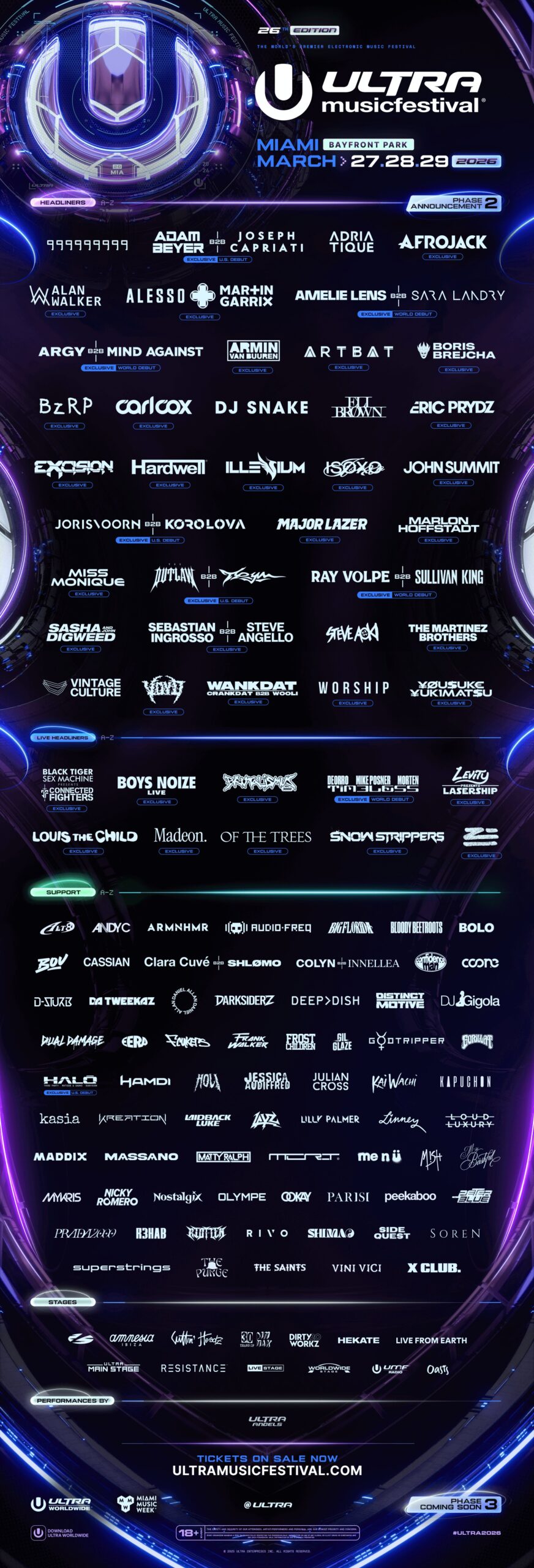
- 3.5 Steve Aoki: High-Intensity DJ Sets
- 3.6 Cuban Hip-Hop Group: A Cultural Blend
- 3.7 Grateful Dead Tribute Project: Improvisational Energy
- 4. Key Venues for the Concerts
- 5. Diversity of Genres Represented
- 5.1 Pop and Indie Highlights
- 5.2 Latin Music’s Dominance
Miami hosts diverse concerts featuring iconic artists
- Miami’s May 4–11, 2026 concert slate spans arena shows, theaters, and late-night clubs.
- Highlights include Ari Lennox (R&B), Steve Aoki (EDM), Yellowcard (pop-punk), and Latin heavy-hitters like Orishas and Blessd.
- Venues from Kaseya Center to Club Space reflect the city—from 21,000-seat spectacles to 1,200-capacity dance floors.
- Ticket prices vary widely by venue and demand, with tiered options and accessibility features common at major rooms.
Choosing Your Miami Music Night
Miami’s live-music “map” this week spans three distinct Miami nights: (1) downtown arena-scale events (Kaseya Center), (2) seated theaters where vocals and arrangements read clearly (Fillmore Miami Beach, James L. Knight Center), and (3) late-night club programming built for endurance (Club Space, LIV). If you’re visiting, the practical choice is often less about genre and more about the kind of night you want—early seated show vs. after-hours set, Miami Beach vs. downtown, and whether you’re planning around transit/parking.
For visitors planning nights around these shows, HireDriverMiami.com covers Miami happenings like this alongside practical local transportation topics—especially the venue-to-venue reality of getting around South Florida during busy event weeks.
Concert Schedule Overview: May 4 to May 11, 2026
Miami’s live calendar for May 4 through May 11, 2026 reads like a compressed snapshot of what the city does best: big-name draws, genre variety, and a venue map that stretches from downtown arenas to Miami Beach theaters and after-hours clubs. This overview reflects the week’s publicly listed events as compiled on May 4, 2026. Across the week, the lineup ranges from indie rock and alt-pop to Latin urban, salsa, jazz, metal, and electronic music that’s built for late nights.
Several dates stand out as tentpoles. May 6 brings a busy night at the Fillmore Miami Beach with pop/electronic and indie programming (including Ashnikko and Belle & Sebastian on the broader schedule). May 7 leans into soul and musicianship with Ari Lennox at the Fillmore and a jazz option the same evening. May 8 is built for energy: Steve Aoki headlines LIV Nightclub, while pop-punk fans have a major draw with Yellowcard and New Found Glory at Hard Rock Live in nearby Hollywood.
May 9 is the week’s densest cluster, with multiple simultaneous choices across the city: Blessd at Kaseya Center, Orishas at the James L. Knight Center, electronic programming at Club Space (ZHU and Alex Wann), and additional R&B/electronic options at smaller rooms. The week closes with a heavier counterprogramming on May 10—Napalm Death and Deadguy at Churchill’s Pub—alongside salsa in Hialeah Gardens with Josimar y su Yambú.
The result is a week where planning matters: not just picking an artist, but choosing the kind of Miami night you want—seated theater precision, arena-scale spectacle, or a club set that runs on festival-style momentum.
| Date (2026) | Artist(s) / Event | Genre (as listed) | Venue | Where it’s listed |
|---|---|---|---|---|
| May 5 | Inner Wave, Los Mesoneros | Indie Rock | Miami Beach Bandshell | Songkick: https://www.songkick.com/metro-areas/9776-us-miami/may-2026 |
| May 5 | DJ UZO | Electronic | Sagamore Hotel South Beach | Songkick: https://www.songkick.com/metro-areas/9776-us-miami/may-2026 |
| May 6 | Ashnikko, Googly Eyes | Pop/Electronic | Fillmore Miami Beach | Ticketmaster (Miami listings): https://www.ticketmaster.com/discover/miami?categoryId=KZFzniwnSyZfZ7v7nJ |
| May 6 | Belle & Sebastian | Indie Pop | Fillmore Miami Beach | Miami Theater (concert dates): https://www.miami-theater.com/dates/2026/05/category/concert |
| May 7 | Ari Lennox, Lekan, Phabo | R&B/Soul | Fillmore Miami Beach | Songkick: https://www.songkick.com/metro-areas/9776-us-miami/may-2026 |
| May 7 | Emmet Cohen | Jazz | Fillmore Miami Beach | Miami Theater (concert dates): https://www.miami-theater.com/dates/2026/05/category/concert |
| May 8 | Steve Aoki | EDM | LIV Nightclub Miami Beach | Ticketmaster (Miami listings): https://www.ticketmaster.com/discover/miami?categoryId=KZFzniwnSyZfZ7v7nJ |
| May 8 | Yellowcard, New Found Glory | Pop Punk | Hard Rock Live, Hollywood | Ticketmaster (Miami listings): https://www.ticketmaster.com/discover/miami?categoryId=KZFzniwnSyZfZ7v7nJ |
| May 9 | Ethel Cain, 9Million | Alt-Pop | Fillmore Miami Beach | Songkick: https://www.songkick.com/metro-areas/9776-us-miami/may-2026 |
| May 9 | Blessd | Latin Urban | Kaseya Center | Ticketmaster (Miami listings): https://www.ticketmaster.com/discover/miami?categoryId=KZFzniwnSyZfZ7v7nJ |
| May 9 | Orishas | Latin Hip-Hop | James L. Knight Center | Ticketmaster (Miami listings): https://www.ticketmaster.com/discover/miami?categoryId=KZFzniwnSyZfZ7v7nJ |
| May 9 | Clara La San | R&B/Electronic | Midline Miami | Ticketmaster (Miami listings): https://www.ticketmaster.com/discover/miami?categoryId=KZFzniwnSyZfZ7v7nJ |
| May 9 | ZHU, Alex Wann | Electronic | Club Space | Songkick: https://www.songkick.com/metro-areas/9776-us-miami/may-2026 |
| May 9 | Candlelight: Tribute to Coldplay | Classical/Pop | Scottish Rite Temple MIA | Miami Theater (dates): https://www.miami-theater.com/dates/2026/04 |
| May 10 | Napalm Death, Deadguy, Shitstorm | Metal | Churchill’s Pub | Ticketmaster (Miami listings): https://www.ticketmaster.com/discover/miami?categoryId=KZFzniwnSyZfZ7v7nJ |
| May 10 | Josimar y su Yambú | Salsa | El Rancho Miami, Hialeah Gardens | Songkick: https://www.songkick.com/metro-areas/9776-us-miami/may-2026 |
Note: event listings can shift (added openers, time changes, venue moves). If you’re planning around a tight schedule, it’s worth double-checking the venue’s official event page the day you go.
Featured Artists and Their Performances
Miami’s May 4–11 window is defined by recognizable names and distinct live identities—artists whose shows are built around more than a setlist. Some deliver tightly arranged performances that reward close listening; others thrive on crowd interaction and volume. Together, they illustrate why Miami can host multiple “main events” on the same night and still find an audience for each.
The week’s headliners and featured acts also reflect Miami’s cultural mix. There’s contemporary R&B with Ari Lennox, pop-punk nostalgia with Yellowcard, and electronic spectacle with Steve Aoki. Latin music remains central to the city’s identity, with a Cuban hip-hop group bringing a blend of rap and traditional sounds, and major Latin/urban programming elsewhere on the calendar. For fans who prioritize musicianship and improvisation, a Grateful Dead tribute project offers extended jams and a community feel that contrasts with the city’s big-room productions.
What unites these performances is the way they map onto Miami’s venues: theaters for detail and dynamics, arenas for mass singalongs, and clubs for intensity and late-night stamina. In a single week, the city makes room for multiple definitions of what a “must-see” show looks like.
Choose Shows by Vibe
Pick your show by “vibe,” not just genre:
– If you want big singalongs and a shared-memory crowd: choose the pop-punk/rock nights (e.g., Yellowcard’s nostalgia-forward set).
– If you want vocals and nuance you can actually hear in the room: choose the theater R&B/jazz options (e.g., Ari Lennox; Emmet Cohen).
– If you want late-night, high-intensity momentum (and you’re fine with a later start): choose the club headliners (e.g., Steve Aoki; Club Space electronic bills).
– If you want cultural specificity and rhythmic drive: prioritize Latin/Latin-hip-hop bookings (e.g., Orishas; Blessd) where the crowd energy is part of the experience.
Legendary Rock Band’s High-Energy Set
A legendary rock band anchoring a week like this is a reminder that Miami’s concert market isn’t only trend-driven—it still has room for catalog power. The band continues to draw massive crowds worldwide on the strength of iconic hits that have defined generations, and the expectation in Miami is a high-energy set that leans into classic anthems while still making space for fan favorites.
In practical terms, these shows tend to function as communal events: the kind of night where the audience arrives already knowing the choruses, and the performance is built around momentum rather than discovery. Miami’s appetite for spectacle—big rooms, big sound, big singalongs—fits that model well, especially in a week where other nights skew toward clubs or niche scenes.
The appeal is also cross-generational. A catalog that’s traveled across decades tends to pull longtime fans alongside younger listeners who inherited the music through family playlists, radio staples, or streaming-era rediscovery. In a city that hosts tourists year-round, that broad familiarity matters: it’s the kind of show visitors can choose confidently, even if they’re only in town for a few days.
Former Frontman of The Police: A Musical Journey
The former frontman of The Police arrives with a reputation for musical range and discipline. His signature blend of rock, jazz, and world music has long separated his live performances from straightforward greatest-hits packages, and Miami—culturally layered and internationally oriented—fits the spirit of that approach.
What audiences typically respond to in these shows is precision: arrangements that feel carefully built, musicianship that’s meant to be heard as much as felt, and songwriting that has proven durable over time. The “journey” element is real; the set is less about one mood than about moving through styles that share a common voice.
In a week where many concerts are designed for maximal volume or late-night release, this performance offers a different kind of focus—one rooted in craft. It also aligns with Miami’s long-standing openness to global influences, where world-music textures and jazz sensibilities don’t feel like detours so much as part of the city’s baseline soundscape.
For concertgoers deciding between multiple options, this is the kind of show that appeals to listeners who want more than a party: a performance where the details matter, and where the reward is in how the music is played, not only in how loudly it lands.
Ari Lennox: Contemporary R&B Showcase
Ari Lennox stands out in this week’s lineup as a contemporary R&B voice built for both intimacy and power. She blends soulful vocals with modern production, and her performances often highlight tracks from her critically acclaimed releases—material that tends to translate well to a theater setting where tone and phrasing can carry.
In Miami, that matters because the city’s R&B audience is often split between club-friendly hybrids and more traditional vocal showcases. Lennox sits in a lane that can satisfy both: songs with modern polish, delivered with a singer’s command. The live setting also gives her room to stretch—letting the band and backing arrangements deepen the emotional arc that studio versions only suggest.
Her placement in a week packed with electronic and Latin events also adds balance. Not every night has to be maximalist; sometimes the most memorable shows are the ones that feel direct. For fans, the draw is the voice—how it sits in the room, how it moves between softness and strength, and how it anchors a set that’s designed to be felt as much as heard.
If Miami’s concert week is a menu, Lennox is the course that slows the pace without lowering the stakes.
Yellowcard: A Nostalgic Return
Yellowcard’s return taps into a specific kind of Miami energy: nostalgia with a pulse. Known for incorporating violin into pop-punk, the band is closely tied to the 2000s era when melodic hooks and fast tempos dominated youth playlists. Fans can expect a mix of classic tracks and newer material, a balance that typically turns these shows into both a reunion and a reset.
The violin remains the signature—an element that separates Yellowcard from many of their peers and gives the live sound a lift that’s instantly recognizable. In a venue setting designed for rock volume, that melodic line can cut through the guitars and bring a different emotional color to the set, especially on the songs that longtime listeners associate with formative years.
Paired on the broader schedule with New Found Glory, the night reads as a scene-focused event rather than a single-artist showcase. That matters in Miami, where audiences often travel across neighborhoods (and even to nearby Hollywood) for the right bill. The result is likely to be a crowd that knows the words, arrives early, and treats the show as a shared memory—loud, physical, and surprisingly tender in the moments when the room sings back.
Steve Aoki: High-Intensity DJ Sets
Steve Aoki’s Miami appearance fits the city’s reputation as a dance-music capital. One of the most recognizable names in electronic music, he delivers high-intensity DJ sets built around crowd interaction and festival-style energy. In a nightlife market where audiences expect more than a playlist, Aoki’s brand of performance—big drops, constant motion, and a sense of spectacle—lands naturally.
Miami’s club ecosystem is also uniquely suited to this kind of show. The city attracts locals who treat weekends as ritual and visitors who plan trips around nightlife. That mix tends to amplify the room: tourists bring urgency, locals bring fluency, and the DJ benefits from both. Aoki’s sets are designed to keep that energy climbing, with pacing that rarely allows the crowd to settle.
The appeal isn’t subtlety; it’s intensity. For fans choosing between multiple May dates, Aoki represents the “go big” option: a night where the performance is as much about the collective experience as it is about individual tracks. In a week that includes seated theaters and genre-specific club gigs, this is the event that most clearly signals Miami after dark—loud, bright, and engineered for maximum release.
Cuban Hip-Hop Group: A Cultural Blend
The Cuban hip-hop group on the week’s slate brings a sound that’s both rhythmic and rooted. Blending rap with traditional Latin sounds, the group’s style is distinctive—music that carries cultural depth while still delivering the forward drive that hip-hop audiences expect.
In Miami, that blend isn’t a novelty; it’s part of the city’s musical logic. The audience here includes deep ties to Latin America and the Caribbean, and listeners are often fluent in hybrid forms—songs that move between languages, rhythms, and histories without needing to explain themselves. A performance like this can feel less like a niche booking and more like a home-language event, even for fans who primarily follow global hip-hop.
Live, the strength is in the groove and the message. Traditional elements can add texture and identity, while the rap delivery keeps the set immediate and percussive. For concertgoers, it’s also a reminder that Miami’s Latin music dominance isn’t only about pop charts or arena-scale reggaeton; it includes culturally specific acts that connect to community memory and diaspora experience.
Grateful Dead Tribute Project: Improvisational Energy
For listeners who measure a show by spontaneity, the Grateful Dead tribute project offers a different kind of headline: not star power, but improvisational energy. Reimagining classic material with extended jams, these performances attract dedicated fans of live musicianship—people who come for the variations, the transitions, and the feeling that the night could go somewhere unexpected.
That ethos stands out in a week where many concerts are tightly produced. Tribute projects like this often thrive on the opposite: looseness, risk, and the subtle communication between players. The reward is in the unfolding—how a familiar theme stretches, how a groove deepens, how the band responds to the room.
Miami’s audience for this kind of show may be smaller than the arena crowds, but it’s typically committed. These are concertgoers who value the live moment over the perfect replication of a recording. In a city known for nightlife flash, the appeal here is almost old-school: a room, a band, and the shared patience to let a song breathe.
Key Venues for the Concerts
Miami’s May 4–11 concert week is also a tour of the city’s venue ecosystem—spaces that shape not only how music sounds, but who shows up and how the night unfolds. Venue lineups and the capacity figures referenced below follow the week’s listings as surfaced across major event calendars and ticketing platforms (including Songkick, Ticketmaster, and Miami Theater). The range is wide: a 21,000-capacity arena downtown, mid-size theaters on Miami Beach, and clubs that function as late-night institutions for electronic music.
At the top end is Kaseya Center (capacity listed at 21,000), hosting major events that can pull thousands at a time—exactly the kind of room suited to Latin urban headliners and arena-scale production. These shows tend to be destination nights: planned in advance, built around big staging, and often drawing a mix of locals and visitors.
For a more focused listening experience, Fillmore Miami Beach at Jackie Gleason Theater (capacity listed at 2,700) anchors the week with multiple bookings across indie, pop, and R&B. The Fillmore’s size is large enough to feel like an event but small enough to preserve detail—ideal for artists whose performances rely on vocals, dynamics, or band interplay.
Downtown, the James L. Knight Center (capacity listed at 4,569) sits in the middle: big enough for major touring acts, intimate enough to keep the audience connected to the stage. It’s also strategically placed for pre-show dining and post-show movement through the city center.
On the nightlife side, Club Space (capacity listed at 1,200) represents Miami’s dance-music identity—an environment built for electronic sets and late hours. Meanwhile, LIV Nightclub Miami Beach appears on the schedule for Steve Aoki, reinforcing the city’s reputation for high-profile club bookings.
Beyond these anchors, the week’s listings also point to neighborhood texture: Churchill’s Pub for metal, Miami Beach Bandshell for indie rock, and smaller rooms like Midline Miami for more intimate bookings. Together, they show a city where the venue is part of the story—because in Miami, the room you choose often determines the kind of night you’ll have.
| Venue | Area | Listed capacity (where available) | Best for | Notes for planning | Capacity/source context |
|---|---|---|---|---|---|
| Kaseya Center | Downtown Miami | 21,000 | Arena-scale headliners, big production | Expect heavier traffic and longer entry lines on major nights | Capacity and weekly listings summarized in the Songkick-style venue table cited in the week overview; ticketing commonly appears via Ticketmaster listings: https://www.ticketmaster.com/discover/miami?categoryId=KZFzniwnSyZfZ7v7nJ |
| Fillmore Miami Beach at Jackie Gleason Theater | Miami Beach | 2,700 | Vocals, indie, R&B, seated focus | Good choice if you want a “concert-first” night vs. club pacing | Capacity and venue context appear in the compiled venue table: https://www.songkick.com/metro-areas/9776-us-miami/may-2026 and Miami Theater date listings: https://www.miami-theater.com/dates/2026/05/category/concert |
| James L. Knight Center | Downtown Miami | 4,569 | Mid-size touring acts | Walkable to downtown dining; easier scale than an arena | Capacity and venue context appear in the compiled venue table: https://www.songkick.com/metro-areas/9776-us-miami/may-2026 |
| Club Space | Downtown/Edgewater area (NE 11th St) | 1,200 | Late-night electronic, after-hours energy | Plan for late set times; pacing is different than a seated show | Capacity and venue context appear in the compiled venue table: https://www.songkick.com/metro-areas/9776-us-miami/may-2026 |
Diversity of Genres Represented
Miami’s concert slate for May 4–11, 2026 is less a single scene than a set of overlapping ecosystems. In one week, the city hosts pop and indie tours, Latin urban headliners, electronic club nights, jazz and classical programming, and rock/metal/punk shows that thrive on community and volume. That breadth is not accidental; it reflects Miami’s multicultural identity and its role as a tourist hub where audiences arrive with different expectations—and promoters can program accordingly.
The diversity also shows up in how genres map to venues. Indie and alternative acts often land in theaters like the Fillmore, where sound and atmosphere support detail. Latin and mainstream urban events scale up to arenas and large downtown rooms. Electronic music concentrates in clubs built for late-night endurance, while jazz and classical offerings provide a quieter counterpoint for listeners who want a more refined evening.
What’s striking is that these genres don’t merely coexist—they compete in real time. On peak nights like May 9, Miami offers simultaneous options across Latin hip-hop, electronic, and other formats, forcing audiences to choose. That kind of density is a sign of a healthy market: enough demand to support multiple scenes at once, and enough venue infrastructure to host them without forcing everything into the same mold.
In short, the week’s programming suggests Miami isn’t just “a party city” or “a Latin music city.” It’s both—and also a place where indie anniversaries, jazz sets, and metal bills can find their people.
Pop and Indie Highlights
Pop, indie, and alternative programming is a major thread through the week, with the Fillmore Miami Beach appearing as a recurring home base. Acts like Belle & Sebastian and Ethel Cain on the broader schedule point to a Miami audience that’s engaged with indie culture and willing to show up for artists whose appeal is built on songwriting, aesthetics, and community buzz rather than radio ubiquity.
These shows tend to attract a younger, culturally engaged crowd—listeners who follow tours closely and treat concerts as social events as much as musical ones. The theater setting matters here: it supports nuance, from quieter passages to lyrical detail, and it creates a shared focus that’s different from a club environment.
The presence of pop/electronic crossover programming (including Ashnikko on the week’s listings) also reflects a broader trend: genre boundaries are porous, and audiences are comfortable moving between pop hooks and electronic textures. In Miami, where nightlife is part of the city’s identity, that crossover can be especially effective—bridging the gap between “concert” and “party” without fully becoming either.
Latin Music’s Dominance
Latin music’s dominance in Miami is visible not only in the number of shows but in their scale. During this week, major Latin and Latin-adjacent events include Blessd at Kaseya Center and Orishas at the James L. Knight Center, alongside salsa programming such as Josimar y su Yambú in Hialeah Gardens. The spread—from arena to regional venues—shows how Latin music in Miami operates at every level of the market.
This dominance aligns with the city’s demographic reality and cultural history. Miami’s substantial Latin American community isn’t a niche audience; it’s foundational. That means Latin concerts can be mainstream events, capable of filling large rooms and anchoring a weekend night.
It also means variety within the category. Latin urban and Latin hip-hop draw different crowds and energies, while salsa offers a more traditional dance-centered experience. Even within a single week, Miami’s Latin programming isn’t one sound—it’s a spectrum, from contemporary urban performance to rhythm-forward live bands.
The takeaway is simple: in Miami, Latin music isn’t a “genre lane” competing for space. It’s a central pillar around which the rest of the city’s concert life rotates.
Electronic and Dance Scene
Miami’s electronic and dance scene remains one of its most globally recognizable cultural exports, and the May 4–11 schedule reinforces that status. The week includes Steve Aoki at LIV Nightclub Miami Beach, plus electronic programming at Club Space featuring ZHU and Alex Wann, and additional listings such as DJ UZO and a Brazilian DJ known for melodic house and deep grooves.
The venues matter as much as the names. Club Space, with its listed 1,200 capacity, is built for the kind of night where the music is continuous and the crowd is committed. LIV, by contrast, signals high-profile nightlife—an environment where the DJ is part of a larger spectacle and the audience expects a peak-time experience.
Miami’s dance calendar also benefits from the city’s tourism engine. Visitors often arrive primed for nightlife, while locals treat club culture as a year-round constant rather than a seasonal novelty. That combination helps explain why Miami can support multiple electronic events in the same week, even alongside major arena concerts.
In this context, electronic music isn’t just entertainment—it’s infrastructure: a reliable, high-demand format that keeps the city’s nights moving.
Jazz and Classical Offerings
Amid the week’s high-volume programming, jazz and classical offerings provide a different kind of Miami night—one built around listening rather than spectacle. The schedule includes Emmet Cohen performing jazz at the Fillmore, and a Candlelight concert format that blends classical presentation with popular repertoire, including a “Tribute to Coldplay” at the Scottish Rite Temple.
These events tend to attract mature audiences and listeners seeking a more sophisticated evening, but they also appeal to younger concertgoers who want variety—especially when classical programming is framed through contemporary music. The Candlelight concept, in particular, reflects a broader trend of genre cross-pollination: classical instrumentation and ambiance used to reinterpret pop material in a setting that feels curated and intimate.
In a city often defined by nightlife extremes, these shows offer an alternative identity: Miami as a place for craft, composition, and quieter cultural experiences. They also demonstrate how the same venue ecosystem can support radically different moods within days of each other—R&B one night, jazz the next, and pop/indie soon after.
Rock, Metal, and Punk Events
Rock, metal, and punk remain essential counterweights in Miami’s genre mix—scenes that thrive on intensity, community, and the physicality of live sound. The week includes Yellowcard (with New Found Glory) for pop-punk fans, and a heavier bill with Napalm Death and Deadguy at Churchill’s Pub.
These shows often land in smaller venues, where proximity amplifies the experience. The crowd is typically more scene-oriented: people who know the openers, recognize the subgenres, and treat the night as a gathering rather than a one-off outing. That community aspect is part of the appeal, especially in a city where many events are tourist-driven.
The contrast within “rock” is also notable. Pop-punk nostalgia draws a broad audience and leans into singalongs and shared memory, while metal bills emphasize endurance and intensity. Both can coexist in the same week because they serve different needs—and because Miami’s venue network can accommodate both a large, polished production and a rawer club show.
In a lineup dominated by Latin and electronic programming, these events signal that Miami’s musical identity still has room for guitars turned up loud.
Audience Demographics and Attendance Expectations
Miami’s concert audiences during May 4–11, 2026 are likely to mirror the city itself: diverse, multilingual, and shaped by a constant flow of visitors. The week’s programming—Latin urban at an arena, indie at a theater, electronic at clubs, and metal at a pub—suggests multiple demographic “micro-audiences” operating at once rather than a single unified crowd.
While specific attendance figures aren’t publicly available for each event, venue capacities offer a practical guide to scale. Major events at Kaseya Center (listed at 21,000 capacity) can move thousands of tickets in a single night, especially for Latin headliners with broad appeal. Mid-size theaters like the Fillmore Miami Beach (listed at 2,700) and the James L. Knight Center (listed at 4,569) typically draw crowds that are large enough to feel electric but still
Estimating Crowd Feel and Flow
A practical way to estimate “how crowded will it feel?” (without pretending we know exact ticket counts):
1) Start with listed venue capacity (upper bound).
2) Adjust for configuration: seated theater vs. GA floor vs. club layout can change usable capacity.
3) Look for demand signals on the primary listing (e.g., limited remaining sections, added dates, or prominent placement on major ticketing calendars).
4) Factor in Miami-specific conditions: weekend nights + Miami Beach nightlife tend to push later arrivals and longer entry lines; downtown arena nights tend to concentrate traffic around doors-open.
Checkpoint: if you’re choosing between two same-night options, the smaller room can feel “more packed” even with fewer people—because density and sightlines matter as much as raw attendance.
This guide reflects publicly available event and venue information as of May 4, 2026. Lineups, set times, and venues may change, especially around busy weekends. For the most accurate day-of details, confirm updates on the venue’s official site or the primary ticketing listing.