

Table of Contents
- 1. Freebee network expands to enhance downtown mobility
- 2. Expansion of Freebee Network in Downtown Miami
- 3. New All-Electric Vehicles Added to Fleet
- 4. Extended Routes Connecting Key Districts
- 5. Launch Date and Official Announcement
- 6. Ridership Growth Since Program Launch
- 7. On-Demand Service Availability and App Usage
- 8. Expanded Service Hours for Riders
- 9. The Future of Urban Mobility in Miami
- 9.1 Embracing Sustainable Transportation Solutions
- 9.2 Enhancing Community Connectivity and Accessibility
Coverage note: This update is part of HireDriverMiami.com’s ongoing focus on practical transportation and mobility changes that affect visitors and residents moving around Miami’s core neighborhoods.
Freebee network expands to enhance downtown mobility
Expanded Electric Transit in Downtown Miami
– What changed: 6 new all-electric vehicles added and routes extended to better link Brickell, the Central Business District, and the Arts & Entertainment District.
– Who announced it: Miami Downtown Development Authority (DDA).
– When/where it was unveiled: March 18 at Mary Brickell Village.
– How to ride: Request in the Freebee app or hail along designated routes.
Expansion of Freebee Network in Downtown Miami
Downtown Miami’s Freebee network is widening its footprint at a moment when the city’s urban core is growing denser—and when short trips can feel disproportionately difficult. The Miami Downtown Development Authority (DDA) says the latest expansion is designed to better connect people and places across Downtown’s fast-growing mix of residential towers, office corridors, cultural venues, and waterfront destinations.
Friction-Free Downtown Connections
Downtown’s “first/last-mile” gap is often less about distance and more about friction: heat, rain, traffic, and parking can turn a 1–2 mile trip into a hassle. The DDA is positioning Freebee as a no-cost connector that helps people move between districts and major destinations without needing to plan around parking.
The DDA is the agency that unveiled the expanded fleet and framed the rollout as part of Downtown’s mobility strategy, positioning Freebee as a free, on-demand connector between key districts.
At its core, the service is meant to be simple: a no-cost way for people who live, work, and visit Downtown Miami to move between everyday destinations—offices, restaurants, museums, entertainment hubs, and the bayfront—without needing to drive, hunt for parking, or rely on a personal vehicle for a trip that might only be a mile or two. That “short-hop” niche is where Freebee has positioned itself as a mobility link, particularly for first- and last-mile connections in dense areas.
The DDA frames the expansion as the next step in an evolution. What began as a compact downtown loop has steadily broadened into a districtwide network that aims to link some of Miami’s busiest corridors. The newest changes build on that original concept by pushing service farther into Brickell and strengthening connections across neighborhoods that have seen rapid residential, commercial, and cultural growth.
As described by the DDA, the upgraded service is a free, on-demand shuttle: riders can request trips through the Freebee app, with the option to hail vehicles along designated routes.
The expansion is also about capacity and coverage. With additional vehicles and new routing, the DDA is signaling that the service is no longer a small circulator experiment but an increasingly visible part of Downtown’s transportation landscape—one that is intended to complement how people already move through the area, whether they are commuting, meeting friends, or visiting attractions.
In practical terms, the network’s growth is meant to reduce friction for short trips in the urban core. In a dense downtown, even a quick errand can become a time-consuming drive when traffic and parking are factored in. A free, on-demand shuttle—if it is available when and where people need it—can shift those trips away from private cars while still keeping travel convenient.
The DDA’s message is that connectivity is the point: linking key activity centers so that Downtown Miami functions more like a cohesive, walkable set of districts rather than isolated pockets separated by busy streets and limited parking.
New All-Electric Vehicles Added to Fleet
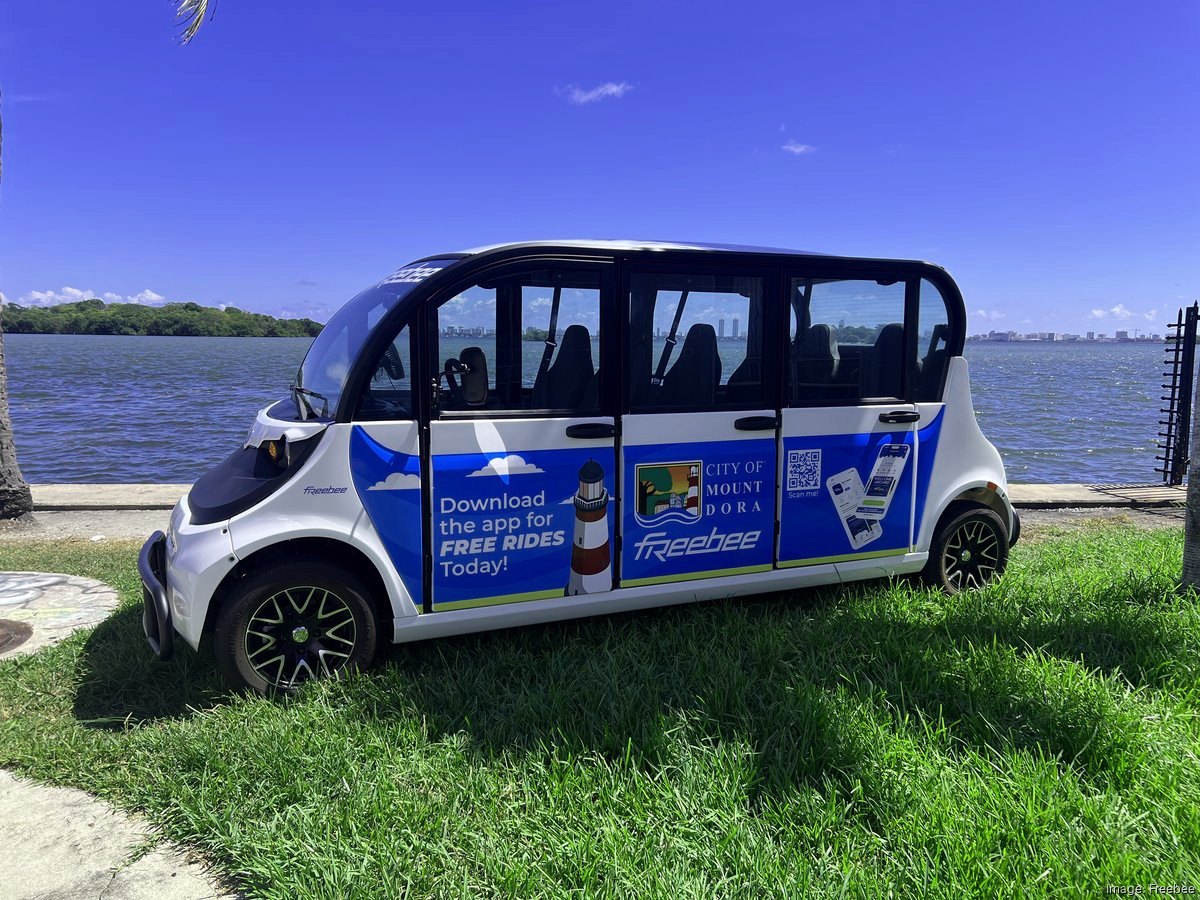
A central element of the expansion is the addition of six new all-electric vehicles, increasing the size and visibility of the Freebee fleet operating in Downtown Miami. In the expanded network, the fleet is described as including new Volkswagen ID electric vans alongside electric vehicles provided through the Miami Parking Authority. The DDA presented the new vehicles as both a capacity upgrade—more vehicles available to pick up riders—and a modernization step aligned with the city’s push toward cleaner transportation options in dense neighborhoods.
| Fleet element (Downtown Miami DDA zone) | What the article describes | Why it matters for riders |
|---|---|---|
| New vehicles added | Six new all-electric vehicles | More capacity can improve availability and reduce waits during busy periods |
| Vehicle type mentioned | Volkswagen ID electric vans | Larger, modern EV vans can improve comfort and visibility in the network |
| Partner vehicles | Electric vehicles provided through the Miami Parking Authority | Indicates a multi-agency fleet supporting the same service area |
| Service model tied to fleet | Free, on-demand shuttle (app request + route hailing) | Fleet size directly affects responsiveness in an on-demand system |
The emphasis on “all-electric” is not incidental. In a downtown environment, vehicle emissions and noise are felt more acutely because of the concentration of people, buildings, and street-level activity. Electric vehicles can help reduce local tailpipe emissions and contribute to a quieter ride experience, which matters when shuttles are circulating near restaurants, residential buildings, and cultural venues.
The expansion also reflects a broader shift in how microtransit services are being positioned: not as a novelty, but as a practical layer in the transportation mix. Adding vehicles is one of the most direct ways to improve service reliability—reducing wait times and increasing the likelihood that a rider can get a trip when they need it, especially during busy periods.
Operationally, the additional vehicles are intended to increase availability across the network. That matters because on-demand systems are only as useful as their responsiveness. If a rider opens an app and sees long waits—or can’t find a vehicle nearby—the service becomes less competitive with alternatives like walking, ride-hailing, or simply driving. More vehicles can help the system better match supply with demand across multiple districts.
The DDA’s rollout also underscores that the fleet is part of a public-facing mobility strategy. Freebee is framed as a “key mobility link” in Downtown, and the upgraded fleet is meant to support that role as the service expands beyond a tight loop into a broader network. (Operational details are also summarized on the operator’s Miami DDA circulator page: https://ridefreebee.com/fixed-route/miami-dda-circulator)
For riders, the fleet expansion is likely to be felt in the most basic way: more chances to catch a ride. For the city, the electric fleet is a way to expand mobility options without adding more conventional vehicle traffic that contributes to emissions in the urban core.
In a fast-growing downtown, the question is often not whether people need to move, but whether they can do so efficiently without defaulting to a car. The DDA is betting that a larger, all-electric fleet makes that choice easier for more trips, more often.
Extended Routes Connecting Key Districts
The expansion is not just about adding vehicles; it is also about where those vehicles go. The DDA says the updated Freebee network includes extended routes linking Brickell, the Central Business District, and the Arts & Entertainment District—three areas that collectively represent much of Downtown Miami’s daily movement: work commutes, dining and nightlife, cultural visits, and waterfront activity.
Smooth Cross-District Ride Planning
Common ways riders tend to use the expanded district links (practical examples):
– Brickell → Central Business District: office meetings, lunch plans, quick errands without moving a car.
– Central Business District → Arts & Entertainment District: museums/venues and waterfront stops, especially when parking is tight.
– Brickell → Arts & Entertainment District: cross-district dining/entertainment plans where a short drive would otherwise mean a second parking search.
Quick checkpoints that help the trip go smoothly:
– Confirm you’re requesting within the service area shown in-app.
– If the app shows a long wait, consider hailing along a designated route if you’re already on a busy corridor.
– Plan around the posted end time (especially Sun–Thu evenings) so you’re not stranded after hours.
This kind of routing matters because Downtown Miami is not a single destination. It is a cluster of districts with distinct rhythms and peak times. Brickell draws office workers and residents; the Central Business District anchors major employment and civic activity; and the Arts & Entertainment District concentrates museums, venues, and waterfront attractions. Connecting them more directly can make it easier to move across the urban core without a car, particularly for short trips that might otherwise require a drive and a parking search.
The DDA’s description of the service highlights the idea of connecting “people and places” across the city’s fast-growing core. That language reflects a practical reality: as Downtown adds residents and visitors, the number of short trips increases—between towers and restaurants, between offices and museums, between waterfront destinations and entertainment hubs. A network that links these areas can function as connective tissue, helping Downtown behave like an integrated environment rather than a set of separate pockets.
The extended routing also builds on the service’s evolution. Freebee is described as having grown from a compact downtown loop into a broader districtwide network. The latest changes push farther into Brickell and strengthen cross-neighborhood connections, suggesting a deliberate attempt to match service geography with how Downtown Miami has expanded in recent years.
For visitors, the benefit is straightforward: a free shuttle that can help navigate between high-activity areas without needing to understand parking rules or drive in congested corridors. For residents and workers, the value is often in the “in-between” trips—getting from a building to a restaurant, from a transit connection to an office, or from one district’s activity center to another.
That hybrid approach—on-demand requests plus the ability to catch a vehicle in the flow of a route—can be particularly useful in dense corridors where people may be outside already and want the next available ride.
Ultimately, the route expansion is a statement about priorities: the DDA is focusing on the busiest, most interconnected parts of Downtown Miami’s core districts. If the network succeeds, it can reduce the need for short car trips while improving the ease of moving between the places where Downtown’s daily life happens.
Launch Date and Official Announcement
The DDA’s expanded Freebee service was formally unveiled March 18 at Mary Brickell Village, a location that underscores the expansion’s emphasis on better connecting Brickell with the rest of Downtown. The event marked what the DDA described as the official rollout of the upgraded free, on-demand shuttle service.
DDA leadership used the unveiling to frame the expansion as a mobility milestone for the urban core. Among those present were DDA Chairman and City of Miami District Four Commissioner Ralph Rosado, along with the DDA’s CEO and Executive Director Christina Crespi. Their participation signaled that the expansion is being treated as a significant piece of Downtown’s transportation strategy rather than a minor operational tweak.
The announcement positioned Freebee as a growing “key mobility link” in the area—language that reflects how the service is intended to function: not as a replacement for major transit, but as a connector that helps people complete short trips and bridge gaps between destinations. In dense downtown environments, those gaps can be the difference between choosing transit or choosing a car, between walking in uncomfortable conditions or making a quick hop, between visiting one district or skipping it.
Rosado’s remarks emphasized the on-demand nature of the service and its role in connecting key destinations. “Available on demand, the Freebee service will offer a simple way for residents and visitors to move between key destinations, helping keep our city moving and more connected than ever,” he said. The quote captures the DDA’s central pitch: simplicity, connectivity, and a service model that fits how people actually move—especially visitors who may not be familiar with local transit patterns.
The rollout at Mary Brickell Village also served as a public marker of the service’s geographic shift. Brickell is one of Miami’s busiest corridors, and extending service farther into that district suggests the DDA is responding to demand patterns that go beyond the traditional downtown loop. It also reinforces the idea that Downtown Miami’s “core” is not confined to one small area but spans multiple districts with heavy daily movement.
An official unveiling matters for practical reasons too. It helps set expectations: that the expanded fleet is in service and that routes have been updated. It also provides a clear moment for residents, workers, and visitors to reassess how they get around Downtown—particularly if they have defaulted to driving for short trips.
In a city where transportation options can feel fragmented, the DDA’s announcement is an attempt to make one piece of the system more visible and easier to use: a free, on-demand shuttle network designed to connect Downtown’s most active districts.
Ridership Growth Since Program Launch
The DDA’s decision to expand Freebee is grounded in early usage: since launching in November 2023, the program has carried more than 40,000 passengers. For a service focused on short trips within a defined urban area, that figure is a signal that the concept has found an audience—residents, workers, and visitors looking for a no-cost way to move around Downtown Miami.
Interpreting Passenger Counts Meaningfully
How to interpret “more than 40,000 passengers since November 2023” (a quick reader framework):
– What it likely represents: total boardings/trips taken in the Downtown Miami program over that timeframe.
– What it doesn’t tell you by itself: how many unique riders that includes, average wait time, trip length, or whether rides were concentrated on certain days/seasons.
– Why it still matters: it’s a baseline signal of real-world usage that can justify adding vehicles and extending coverage—especially for a service designed around short, frequent trips.
Ridership totals alone do not explain why people choose a service, but the DDA’s description offers clues. Freebee is positioned as an alternative to car trips in a place where driving a short distance can be inefficient. It also addresses first- and last-mile needs—helping people get from one major destination to another, or from a transit-adjacent area to a final stop like an office, restaurant, museum, or waterfront site.
The “more than 40,000 passengers” milestone also suggests that Freebee has become increasingly visible in Downtown’s transportation landscape. Visibility matters for microtransit: riders are more likely to use a service they see operating regularly, especially if they can hail it along designated routes in addition to requesting it through an app. A shuttle that feels present—part of the street scene—can become a default option for certain trips.
The DDA describes Freebee as having “steadily evolved” from a compact downtown loop into a broader network. That evolution implies that ridership and demand have not been static. As Downtown Miami’s urban core grows—adding residents, offices, and attractions—the number of potential short trips grows with it. A service that is free and designed for short hops can scale in relevance as density increases.
The ridership figure also helps explain the logic of adding capacity. If a service is carrying tens of thousands of passengers within its first year-plus of operation, expanding the fleet and extending routes can be seen as a response to demonstrated use rather than a speculative bet. The DDA’s framing—“as it continues to grow as a key mobility link”—suggests it views ridership as part of an upward trajectory.
There is also a broader context: Freebee operates beyond this single zone, and the company has reported serving nearly 2 million passengers across Florida in 2025, with an aim to surpass 3 million annual passengers in 2026 as expansion continues. While that statewide figure is not specific to Downtown Miami, it indicates that the model—free, app-based microtransit—has been adopted in multiple places and is being scaled. (Those statewide figures are reported as company-wide totals/targets and should be read as estimates rather than a guarantee of future ridership.)
For Downtown Miami, the more than 40,000 riders since November 2023 provide a baseline. The expansion—six new vehicles and extended routes—sets the stage for the next ridership chapter: whether increased availability and better cross-district connections translate into more frequent use, and whether the service can further reduce reliance on short car trips in the urban core.
On-Demand Service Availability and App Usage
Freebee’s Downtown Miami service is built around flexibility: riders can request trips on demand through the Freebee app, or they can hail vehicles along designated routes. That dual access model is central to how the DDA is presenting the service—less like a traditional fixed-route shuttle and more like a microtransit option that adapts to where people are and where they need to go.
How to Ride Freebee
How to ride (quick, practical steps):
– Open the Freebee app and confirm you’re in the Downtown Miami service area shown on the map.
– Enter your pickup and drop-off; request the ride.
– Watch for the assigned vehicle and pickup instructions in-app.
– If you’re already on a designated route and see a Freebee vehicle approaching, you can hail it instead of placing a request.
– Before you head out late, double-check the day’s end time so you’re not requesting after service hours.
For many riders, the app is the front door. The DDA notes that rides are available through the Freebee app. In practice, that means a rider can open the app, request a pickup, and use the service for short trips within the coverage area—an approach that can be especially appealing in a downtown environment where walking may be inconvenient due to heat, rain, or time constraints.
At the same time, the ability to hail vehicles along designated routes is an important complement. Not everyone wants—or is able—to rely on an app in the moment. Street hailing can also make the service feel more like a visible public mobility option rather than something hidden behind a smartphone interface. In dense corridors, hailing can reduce friction: if a vehicle is already nearby, a rider can simply catch it without placing a request.
The DDA’s description emphasizes that this setup creates a “flexible system” that moves people through dense corridors without the need for parking or personal vehicles. That is a key point in Downtown Miami, where parking availability and cost can shape travel decisions. If a free shuttle can replace a short drive, it can also reduce the secondary impacts of that drive—searching for a space, paying for parking, and adding another car to congested streets.
The on-demand model also aligns with how Downtown trips often happen. Many are spontaneous: a lunch meeting, a quick visit to a waterfront destination, an evening plan that shifts from one district to another. Fixed-route systems can work well for predictable commuting patterns, but they can be less convenient for irregular, short-distance travel. On-demand service is designed to meet that variability.
Still, availability is the make-or-break factor for any on-demand system. The DDA’s expansion—adding six vehicles—directly addresses that issue by increasing the number of vehicles circulating across the network. More vehicles can mean shorter waits and better coverage, which in turn can make riders more willing to choose Freebee over driving or ride-hailing.
In a city that attracts visitors and new residents, ease of use matters. The DDA’s pitch is that Freebee is “simple” and “no-cost,” and the app-based request system is part of that simplicity—especially for people who may not know local transit routes but can navigate a straightforward on-demand interface.
Expanded Service Hours for Riders
The expanded Freebee service is not only broader in geography and larger in fleet size; it is also defined by a clear weekly schedule that reflects when Downtown Miami is most active. The DDA’s published hours provide a practical guide for residents, workers, and visitors trying to plan around the service—whether for daytime errands, evening dining, or weekend outings.
| Day | Operating hours |
|---|---|
| Monday–Thursday | 8:30 a.m. to 7:30 p.m. |
| Friday | 8:30 a.m. to 11:30 p.m. |
| Saturday | 10 a.m. to 11:30 p.m. |
| Sunday | 10 a.m. to 7 p.m. |
The operating hours are:
- Monday through Thursday: 8:30 a.m. to 7:30 p.m.
- Friday: 8:30 a.m. to 11:30 p.m.
- Saturday: 10 a.m. to 11:30 p.m.
- Sunday: 10 a.m. to 7 p.m.
Those hours suggest a service designed around both workday movement and nightlife patterns. The later Friday and Saturday end times—11:30 p.m.—stand out as a nod to Downtown’s evening economy, when people are moving between restaurants, entertainment hubs, and waterfront destinations. Extending service later into the night can also reduce the temptation to drive for short trips during peak social hours, when parking can be especially challenging.
Weekday hours beginning at 8:30 a.m. indicate a focus on morning and daytime activity rather than very early commutes. For many downtown users, that window still captures a large share of trips: late-morning meetings, lunch travel, afternoon errands, and early evening plans. The Monday–Thursday cutoff at 7:30 p.m. suggests the service is oriented toward the workday and early evening, while Friday and Saturday cover more of the nightlife period.
Sunday service ending at 7 p.m. aligns with typical weekend patterns, when daytime activity is high but late-night demand may be lower than Friday and Saturday. The weekend start time of 10 a.m. also reflects a later ramp-up compared with weekdays.
Importantly, the DDA notes that rides are available through the Freebee app during these operating windows. That clarity matters: on-demand services can frustrate users when hours are ambiguous or inconsistent. A predictable schedule helps riders build the service into their routines—knowing, for example, that a Friday dinner in Brickell can still be connected to Downtown later in the evening.
Service hours also shape who benefits most. Workers and residents may use Freebee for midday trips, while visitors may rely on it to move between attractions and dining areas. The extended late-night hours on Friday and Saturday broaden the service’s usefulness beyond strictly daytime mobility.
In a fast-growing urban core, the question is often whether mobility options match the city’s actual hours of activity. By extending service later at the end of the week, the DDA is aligning Freebee with Downtown Miami’s real-world rhythm—work, culture, dining, and entertainment—across the districts the network is designed to connect.
The Future of Urban Mobility in Miami
Miami’s decision to expand a free, on-demand shuttle in its urban core reflects a broader reality: as Downtown grows, mobility has to become more layered. No single mode—driving, rail, buses, walking—solves every trip. The Freebee expansion is an attempt to strengthen one specific layer: short-distance, district-to-district movement that can be inconvenient by car and too far (or too uncomfortable) to walk.
The DDA’s framing makes clear that Freebee is meant to be connective infrastructure—helping people move between offices, restaurants, museums, waterfront destinations, and entertainment hubs. If the service continues to scale in availability and coverage, it could further normalize the idea that not every downtown trip requires a personal vehicle.
Freebee Downtown Benefits and Limits
What Freebee can do well in Downtown (and where it can fall short):
– Benefits: free short trips, easier district-to-district movement, fewer parking-related errands, quieter all-electric vehicles in dense corridors.
– Limits to plan for: service is only useful inside its coverage area; on-demand waits can vary by time/day; service ends earlier on Sun–Thu than on Fri–Sat.
– Best-fit use case: replacing “I’ll just drive and park” for 1–2 mile hops—especially when you’re already in the urban core.
Embracing Sustainable Transportation Solutions
The addition of six all-electric vehicles places sustainability at the center of the expansion. In dense downtown corridors, the benefits of electric fleets—reduced local emissions and quieter operation—are particularly relevant. The DDA’s move also signals that “cleaner” does not have to mean “less convenient”: the service is positioned as both environmentally aligned and easy to use, with on-demand requests through the app and the option to hail along designated routes.
As Miami continues to grow, the transportation choices made in the urban core will shape daily quality of life. Expanding an all-electric microtransit option is one way to add mobility capacity without simply adding more conventional car traffic to already busy streets.
Enhancing Community Connectivity and Accessibility
Freebee’s pitch is fundamentally about access: a no-cost way for residents, workers, and visitors to move between key destinations. The expanded routes linking Brickell, the Central Business District, and the Arts & Entertainment District are designed to make Downtown feel more connected—less like separate zones and more like a single, navigable urban environment.
The early ridership milestone—more than 40,000 passengers since the November 2023 launch—suggests that people are willing to use a free, flexible option when it is visible and available. With expanded fleet capacity, updated routing, and defined service hours that include late-night coverage on Fridays and Saturdays, the DDA is betting that Freebee can play an even larger role in how people experience Downtown Miami—especially for the short trips that define everyday city life.
Service areas, routing, hours, and vehicle availability may change over time, so the in-app map and posted hours are the best day-of reference. Ridership figures and statewide growth targets offer context but don’t reliably predict wait times or coverage in any specific neighborhood. For late trips, confirm the day’s end time before heading out.