

Mary Lou’s Miami opens at W South Beach
- Mama Hospitality has debuted Mary Lou’s Miami, the brand’s third location, as a seasonal residency inside W South Beach.
- The opening revives the former WALL lounge space, closed since 2020, with a supper-club-meets-entertainment concept.
- Co-founders Joe Cervasio, Topher Grubb, and Alex Melillo partnered with Jamie Reuben (Reuben Brothers), via an introduction by Myles Shear (Palm Tree Crew).
- The Miami outpost introduces Mary Lou’s Society (a private members club) and, for the first time, Mary Lou’s Beach—a members-only shoreline experience.
Introduction to Mary Lou’s Miami
Mary Lou’s Miami arrives with the kind of confidence that only comes from momentum. Mama Hospitality—the Palm Beach-based hospitality and nightlife group behind the Mary Lou’s concept—has officially debuted the brand’s third location, bringing its “supper club and entertainment epicenter” to one of Miami Beach’s most storied addresses: W South Beach.
The move is framed as a seasonal residency, but it reads like something more ambitious: a deliberate attempt to rekindle a nightlife room that once helped define the city’s after-dark identity. In the process, Mary Lou’s Miami positions itself as both a continuation of the brand’s rapid expansion and a statement about what Miami nightlife can look like now—nostalgic, theatrical, and intentionally a little absurd.
The concept’s language is telling. Mary Lou’s Miami is described as blending the vintage charm of a supper club with “forward-thinking hedonism” and a “sense of ridiculousness,” a phrase that functions less like a tagline than a guiding principle. It’s also a signal that the venue is designed to be multi-hyphenate: dinner that turns into dancing, a cocktail lounge that becomes an entertainment stage, and a room where the night is meant to feel unpredictable.
That unpredictability is part of the pitch. Mary Lou’s Miami promises an experience that is “never as it seems,” leaning into spontaneity as the energy builds from early evening into late-night revelry. Yet the brand insists on one constant across locations: hospitality at the center. In Miami, that promise is paired with two exclusivity-driven additions—Mary Lou’s Society and Mary Lou’s Beach—meant to extend the brand beyond a single room and into a broader lifestyle orbit.
Location and Venue Details
Mary Lou’s Miami is not opening in a blank space. It is stepping into a venue with a reputation, a memory, and a built-in set of expectations—especially for longtime Miami nightlife regulars. The residency takes over the nightlife space within W South Beach, a property that has long served as a magnet for high-profile visitors and a discerning local crowd.
The decision to revive this particular room is central to the narrative Mama Hospitality is selling: that it can “reanimate cultural spaces of yesterday” through a modern lens. In Miami, that means taking a venue that once hosted celebrity nights and global DJ names, and reintroducing it with a new identity—one that still nods to the past while insisting it belongs to the present.
The location also matters because it reinforces Mary Lou’s positioning as high-end and experience-driven. W South Beach is not a peripheral address; it is a centerpiece of Miami Beach’s luxury ecosystem. By placing Mary Lou’s Miami here, the brand is effectively aligning itself with the hotel’s legacy of nightlife spectacle, while also promising a different kind of atmosphere—one rooted in supper-club glamour, surrealist visuals, and curated indulgence.
W South Beach: A Historic Nightlife Hub
W South Beach’s nightlife footprint is inseparable from the legend of WALL lounge, which operated as a mainstay in Miami’s scene before closing in 2020. For years, WALL was described as an integral part of the city’s nightlife lore—frequented by celebrities, a discerning Miamian crowd, and a steady rotation of household global DJ names. In a city where venues can be fleeting, that kind of sustained relevance becomes its own form of cultural capital.
Mary Lou’s Miami is explicitly positioned as the next chapter in that lineage. The concept is framed as a torchbearer—an “arbiter” chosen to rekindle a storied space with a high-end cocktail lounge approach, backed by world-class design, hospitality, and entertainment. Even the language around the experience includes a nod to the room’s previous inhabitant, suggesting that the new residency is meant to feel connected to what came before, not sealed off from it.
The setting also amplifies the brand’s promise of unpredictability. W South Beach is associated with legendary parties and unabashed extravagance; Mary Lou’s Miami is described as reimagining that spirit rather than replicating it. The implication is that the room’s history is not being erased—it’s being repurposed, with a new aesthetic and a new set of rituals designed to make the night feel like a story unfolding in real time.
Transformation of the Space
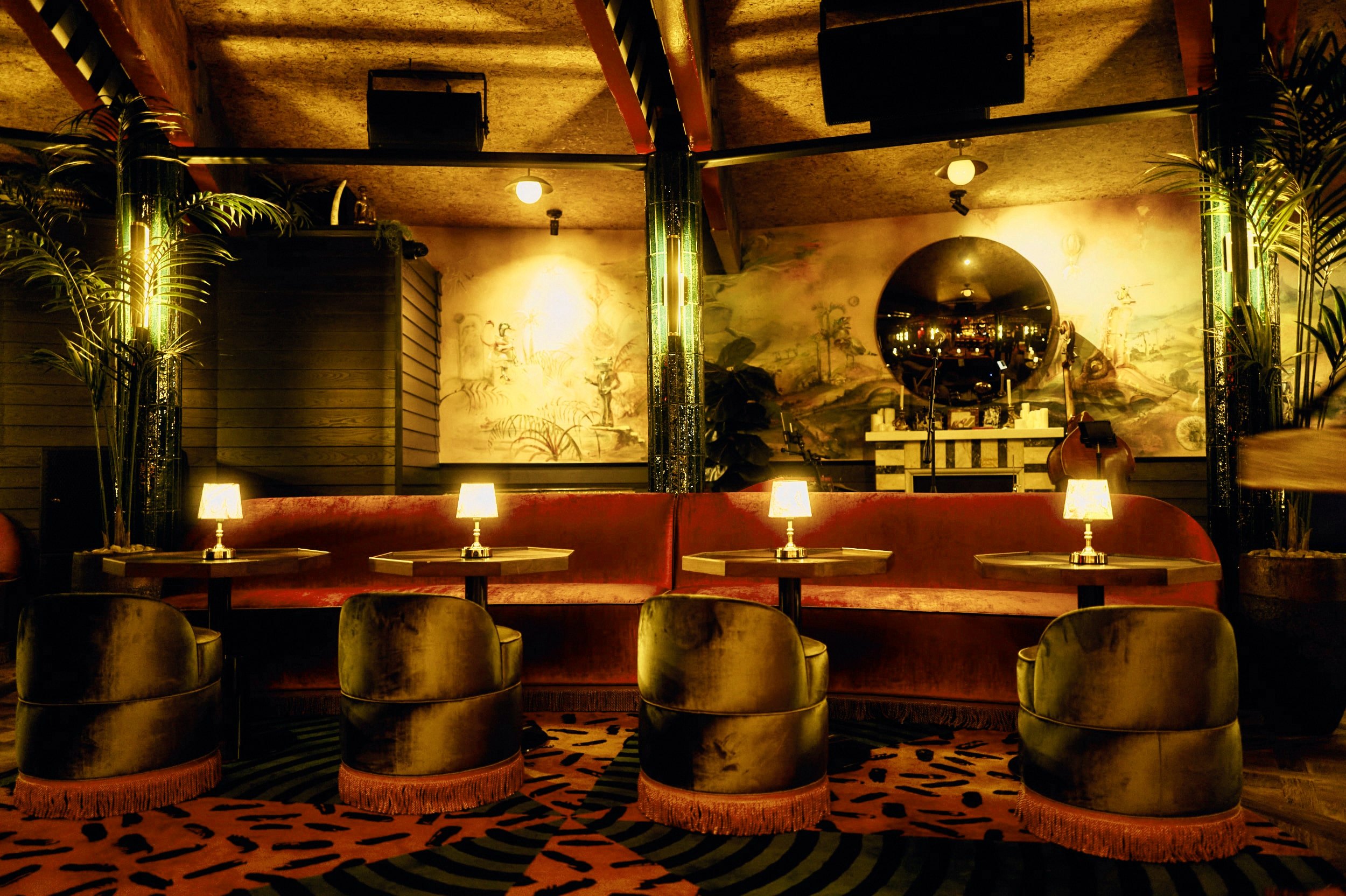
To translate the Mary Lou’s concept into the W South Beach footprint, the team tapped Jason Volenec to reimagine the venue as Mary Lou’s Miami. The goal, as described, is a fusion: the brand’s signature surrealist visual identity combined with the seductive glamour synonymous with Miami Beach. It’s a deliberate coalescence—sensuality and sophistication meeting in a room designed to blur the lines between reverie and reality.
The design cues are specific and maximalist. The space is described as drenched in animal print, rich patterns, and lush textures—an immersive takeover rather than a light refresh. This is not subtle branding; it’s an environment meant to announce itself, to feel transportive, and to create a visual world that guests can step into for the night.
That transformation is also framed as proof of adaptability. Mary Lou’s Miami is presented as a demonstration that the brand can translate its identity into different markets while still capturing the city outside its walls. In other words, the room is meant to feel unmistakably Mary Lou’s—surreal, indulgent, theatrical—while also reflecting Miami Beach’s particular brand of glamour.
The result, according to the concept’s own framing, is an atmosphere refined enough to be high-end and indulgent enough to feel uninhibited. It’s a balancing act: luxury without stiffness, exclusivity without overt performance, and a design language that invites guests to lean into the night’s sense of possibility.
The Concept Behind Mary Lou’s Miami
Mary Lou’s Miami is built on a contradiction that the brand seems to relish: it is both vintage and forward-looking, both polished and playful, both exclusive and intentionally irreverent. The concept is described as a blend of supper-club charm and “forward-thinking hedonism,” anchored by a sensibility that encourages guests to “expect the unexpected.”
That ethos is not incidental. It is tied directly to the brand’s muse, Mary Lou Curtis, and to a guiding phrase attributed to her: “always have a sense of ridiculousness.” In practice, that idea becomes a permission slip—an invitation to treat nightlife as theater, to embrace spontaneity, and to let the night evolve beyond a predictable sequence of dinner, drinks, and departure.
At the same time, the concept is framed as hospitality-first. No matter the backdrop, Mary Lou’s insists that hospitality takes center stage. That claim is important because it positions the venue as more than a party room; it’s meant to be an experience where service, design, and entertainment work together to create something immersive.
In Miami, the concept expands outward. Mary Lou’s Society and Mary Lou’s Beach extend the brand beyond the interior space, turning the residency into a broader ecosystem of access, perks, and curated environments. The result is a multi-layered offering: a nightlife venue, a members club, and—uniquely for the brand—a shoreline experience.
Inspiration from Mary Lou Curtis
Mary Lou Curtis is described as the captivating muse behind the concept—an unapologetic force in the Palm Beach fashion scene and the late grandmother of co-founder Alex Melillo. Her influence is not treated as a decorative backstory; it is presented as the brand’s emotional and aesthetic foundation, shaping how Mary Lou’s thinks about style, attitude, and the kind of guest experience it wants to create.
Curtis’ boutique, La Shack, was celebrated along the East Coast for enchanting high-profile clientele including Jackie O., Elizabeth Taylor, and Betty White. The emphasis is on her bold, vibrant, and feminine designs—an approach that cemented her reputation as a regional style savant for decades. That history matters because it frames Mary Lou’s not just as a nightlife concept, but as an extension of a fashion-forward worldview.
As Mary Lou’s expands, the brand says it remains centered around Curtis’ influence “no matter the location,” informed by her extraordinary life and her ethos. The recurring phrase—“always have a sense of ridiculousness”—functions as a creative compass. It suggests that glamour should come with humor, that luxury should not be self-serious, and that the best nights out often include an element of surprise.
In Miami, that muse-driven identity is meant to translate into a venue that feels both curated and unrestrained: a place where the room itself encourages guests to loosen their grip on routine and lean into the unexpected.
Blending Vintage Charm with Modern Experiences
Mary Lou’s Miami is described as a multi-hyphenate venue that blends the vintage charm of a supper club with a modern, immersive approach to nightlife. The supper club reference evokes a particular kind of evening: dinner that is not separate from entertainment, a room where music and performance are part of the meal, and a sense that the night is staged—without feeling scripted.
But the concept also insists on modernity. The brand frames its approach as “forward-thinking,” and its tone as hedonistic in a way that feels contemporary rather than retro. That’s where the “sense of ridiculousness” becomes crucial: it’s a way to keep nostalgia from turning into imitation. Instead of recreating a past era, Mary Lou’s aims to borrow its glamour and social energy while updating the experience for today’s nightlife expectations.
The Miami residency is also positioned as a nod to the legendary parties of W South Beach’s past, while reimagining the city’s extravagance through the Mary Lou’s lens. The experience is described as building from dinner to dancing, with music that “plays to a feeling” and an atmosphere that lends itself to spontaneity. The promise is not just a night out, but a night that can shift shape—where you may not know who or what you’ll encounter.
In that sense, Mary Lou’s Miami is less about a single format and more about a mood: vintage glamour, modern indulgence, and an environment designed to keep the night open-ended.
The Founders and Their Vision
Mary Lou’s Miami is the product of both creative ambition and strategic alignment. The co-founders—Joe Cervasio, Topher Grubb, and Alex Melillo—have positioned their brand as one that can take culturally resonant spaces and bring them back to life with a modern sensibility. In Miami, that mission is amplified by the significance of the venue they are reviving and the partners they have brought into the project.
The deal that made Mary Lou’s Miami possible was shaped by relationships as much as by real estate. The co-founders joined forces with Jamie Reuben of Reuben Brothers, a global luxury real estate group, to breathe new life into the W South Beach nightlife space. The introduction came through Myles Shear of Palm Tree Crew, described as a strategic Mama Hospitality partner, who connected Reuben with the trio—an alignment that was “instant.”
The founders’ vision is framed around “considered hospitality” and a keen understanding of nightlife’s evolving landscape. Their track record—transforming Berto’s Bait and Tackle into the Palm Beach flagship, and launching Mary Lou’s Montauk at 474 West Lake Drive—supports the claim that they can translate a concept across markets while maintaining a consistent identity.
In Miami, their vision is not just to open another outpost. It is to “resurrect” a coveted nightlife room and position Mary Lou’s as a defining piece of a new era in the city’s nightlife.
Co-Founders of Mary Lou’s
Joe Cervasio, Topher Grubb, and Alex Melillo are presented as the driving forces behind Mama Hospitality and the Mary Lou’s concept. Their work is characterized as a rare ability to bring beloved cultural spaces of yesterday back to life through a modern lens—an approach that suggests they see venues not merely as businesses, but as cultural stages with histories worth reinterpreting.
Their expansion path underscores that strategy. The Palm Beach flagship was created by transforming the historic Berto’s Bait and Tackle into Mary Lou’s—an example of adaptive reuse that aligns with the brand’s broader narrative of resurrection and reinvention. From there, the concept moved “out east” to Montauk, where Mary Lou’s Montauk is described as the most successful hospitality venture to date at 474 West Lake Drive.
The Miami opening is framed as the next logical step, but also as a higher-stakes one. Miami Beach is a market with intense competition and a global nightlife reputation. By choosing to enter through W South Beach—and by explicitly tying the project to the legacy of WALL lounge—the co-founders are signaling confidence in their ability to meet the city’s expectations while reshaping them.
Their stated grounding in considered hospitality is also central. The brand’s messaging repeatedly emphasizes that, regardless of location, hospitality takes center stage—suggesting the founders see service and guest experience as the differentiator that turns a flashy room into a lasting institution.
Partnership with Reuben Brothers
The partnership with Jamie Reuben of Reuben Brothers adds a layer of luxury-world credibility and resources to the Mary Lou’s Miami project. Reuben is described as part of a global luxury real estate group, and his involvement is framed as an act of trust: inspired by Mary Lou’s growth over the past year and its commitment to unmatched hospitality and unforgettable experiences, he “entrusted the trio with the resurrection” of one of Miami Beach’s most coveted outposts.
That language—entrusted, resurrection, coveted—signals that the venue is seen as a prize, not just a lease. It also suggests that the partnership is about more than financing; it is about aligning a nightlife concept with a high-profile hospitality address and a legacy space that carries cultural weight.
The deal itself was brought forth through Myles Shear of Palm Tree Crew, identified as a strategic Mama Hospitality partner. Shear introduced Reuben to the co-founders, and the alignment was described as instant—implying shared taste, shared ambition, and a mutual belief that Mary Lou’s was the right concept to bring back the room.
In practical terms, the partnership positions Mary Lou’s Miami as a project with both creative direction and institutional backing. In symbolic terms, it reinforces the idea that this is not a pop-up in a random venue, but a deliberate reactivation of a landmark nightlife space—one meant to matter in Miami’s ongoing story about where the city goes out at night.
Reviving Miami’s Nightlife Scene
Mary Lou’s Miami is being introduced not simply as a new opening, but as a revival—an attempt to restore energy to a room that once held a central place in Miami Beach nightlife. The residency takes over a space that has been dark since 2020, and the messaging around the project leans heavily on the idea of rekindling: carrying the torch, resurrecting a coveted outpost, and bringing a “new era of nostalgic nightlife” to the city.
That framing matters because Miami’s nightlife is built on both novelty and legacy. New venues compete for attention, but the city also reveres certain rooms that became part of its mythology. By stepping into the former WALL lounge space, Mary Lou’s Miami is implicitly accepting a comparison to what came before—and promising to deliver something worthy of the address.
The brand’s approach is to reimagine rather than replicate. It nods to the space’s previous inhabitant and the legendary parties of W South Beach’s past, while insisting that a night at Mary Lou’s Miami is “never as it seems.” The goal is to create an atmosphere where dinner can become dancing, where music “plays to a feeling,” and where spontaneity is part of the design.
In that sense, the revival is not just architectural or operational. It is cultural: a bid to restore a certain kind of Miami night—lavish, unpredictable, and socially charged—through a concept that blends nostalgia with a modern, surrealist edge.
The Legacy of WALL Lounge
Before Mary Lou’s Miami, the space was known as WALL lounge—closed since 2020, but remembered as a mainstay in Miami nightlife and an integral part of the scene’s legendary lore. WALL’s reputation was built on a specific mix: celebrity presence, a discerning local crowd, and a steady rotation of household global DJ names. That combination made it both aspirational and influential, a place that helped define what “going out” could mean in Miami Beach.
The significance of that legacy is central to why the Mary Lou’s residency is being positioned as a major moment. Reviving a space with that kind of history is different from opening in a new build or an unknown room. It comes with expectations—about sound, service, crowd, and the intangible feeling that a venue is part of the city’s cultural bloodstream.
Mary Lou’s Miami acknowledges that history directly, describing its experience as a nod to the space’s previous inhabitant. The implication is that the new concept is not ignoring WALL’s identity; it is using it as a reference point, a kind of inherited mythology that can be reinterpreted.
For Mama Hospitality, the WALL legacy also provides a stage for its stated specialty: reanimating cultural spaces. If the brand’s reputation includes bringing beloved venues “back to life through a modern lens,” then taking on a room like this is both a test and an opportunity—proof that it can honor the past while creating something that feels urgent now.
Creating a New Era of Nightlife
Mary Lou’s Miami is described as bringing a “new era of nostalgic nightlife” to Miami Beach—an intentionally paradoxical phrase that captures the project’s ambition. Nostalgia is the hook: the revival of a storied space, the nod to legendary parties, the supper-club glamour. The “new era” is the promise: a modern lens, forward-thinking hedonism, and an atmosphere designed to feel spontaneous rather than programmed.
The experience is framed as dynamic. As the energy builds from dinner to dancing, the music is said to “play to a feeling,” and the room becomes a place where the night can shift unexpectedly. The brand leans into the idea that you never know who or what you may experience there—suggesting entertainment that is not strictly confined to a DJ booth or a scheduled performance, but woven into the night’s flow.
At the same time, Mary Lou’s Miami emphasizes hospitality as the constant. The venue is described as exclusive but never performative, aiming to create a setting for unforgettable moments with an exhilarating lineup of talent (without specifying names). The tone is playful and irreverent, aligned with the “ridiculousness” ethos attributed to Mary Lou Curtis.
Ultimately, the “new era” claim is about definition. Mary Lou’s Miami refuses to be just a destination for a night out; it positions itself as a defining piece of Miami nightlife—an attempt to shape what the city’s next chapter of after-dark culture looks and feels like.
Design and Atmosphere of Mary Lou’s Miami
Mary Lou’s Miami is selling an environment as much as an event. The residency’s design is described in immersive terms—less a room you enter than a world you step into. The goal is to fuse Mary Lou’s signature surrealist visual identity with the seductive glamour associated with Miami Beach, creating a space that feels both sensual and sophisticated.
This is maximalism with intent. The venue is described as drenched in animal print, rich patterns, and lush textures, a palette that signals indulgence and theatricality. The effect, according to the concept’s framing, is to blur the lines between reverie and reality—an atmosphere that encourages guests to suspend the ordinary rules of a night out and embrace something more playful, more unpredictable.
The atmosphere is also positioned as a bridge between past and present. Mary Lou’s is often described as a modern-day Studio 54—an association that evokes celebrity, decadence, and cultural electricity. In Miami, that reference is reinforced by the venue’s history and by the brand’s own roster of regulars mentioned in connection with Mary Lou’s: Michael Jordan, Venus Williams, and Baby Jane Holzer.
Design here is not just décor; it is strategy. It’s meant to capture the city outside the walls while remaining unmistakably Mary Lou’s—refined enough to feel high-end, indulgent enough to feel uninhibited, and cohesive enough to turn a seasonal residency into a destination with a distinct identity.
Jason Volenec’s Role in Reimagining the Space
For the breakout residency at W South Beach, the Mary Lou’s team tapped Jason Volenec to reimagine the space into Mary Lou’s Miami. His role is framed as transformative: taking a venue with an established nightlife legacy and translating it into the Mary Lou’s universe without losing the seductive glamour that Miami Beach is known for.
The design mission is described as a fusion—Mary Lou’s signature surrealist visual identity meeting Miami Beach sophistication. That suggests a careful calibration: surrealism can tip into chaos, while Miami glamour can tip into cliché. The stated goal is an “unmistakable coalescence of sensuality and sophistication,” implying that the room should feel provocative but controlled, lavish but intentional.
Volenec’s reimagining is also positioned as a way to bring Mary Lou’s “to life” in this specific space. That phrase matters because it suggests the brand is not simply installing logos or repeating a template. Instead, the residency is meant to feel like an adaptation—Mary Lou’s translated into a new architectural and cultural context.
The result is described as an environment that blurs reverie and reality, reinforcing the brand’s promise that a night at Mary Lou’s Miami is never as it seems. In a city where design is often part of the nightlife competition, the Volenec-led transformation is presented as a core differentiator: a room built to be remembered.
Signature Visual Identity and Aesthetic
Mary Lou’s Miami leans into a signature visual identity that is both surrealist and seductive, designed to feel immersive rather than merely stylish. The space is described as drenched in animal print, rich patterns, and lush textures—elements that create a tactile sense of luxury and a visual sense of excess. It’s an aesthetic that signals indulgence immediately, without waiting for the first cocktail.
The brand frames this look as a “takeover,” suggesting a comprehensive transformation rather than a partial redesign. The intention is to blur the lines between reverie and reality, creating a room where guests can feel transported—where the environment itself encourages spontaneity and a loosening of everyday restraint.
This aesthetic is also tied to Mary Lou’s broader reputation. The concept has garnered regulars including Michael Jordan, Venus Williams, and Baby Jane Holzer, and it is described as having a cult reputation akin to a modern-day Studio 54. Those references function as shorthand for the kind of crowd and energy the brand wants to attract: culturally aware, socially connected, and drawn to places that feel like scenes rather than simple venues.
At the same time, the brand insists the atmosphere is refined as well as indulgent. That balance—polish with irreverence—is central to Mary Lou’s identity. In Miami, the aesthetic is meant to capture the city’s glamour while maintaining the brand’s own surreal, playful edge, making the room feel both of-the-place and unlike anything else around it.
Exclusive Experiences at Mary Lou’s Miami
Mary Lou’s Miami is not limiting its ambitions to what happens inside the lounge. The residency introduces two exclusivity-driven offerings that expand the concept into a broader lifestyle proposition: Mary Lou’s Society, a private members club, and Mary Lou’s Beach, a members-only shoreline experience.
Both are framed as extensions of the brand’s hospitality-first philosophy. The Society is positioned as a rejection of traditional private club rules, emphasizing belonging over status signaling. The Beach, meanwhile, is described as a rare and coveted piece of Miami real estate, redesigned through the Mary Lou’s lens and reserved for Society members.
These offerings also reinforce the brand’s promise that Mary Lou’s is more than a destination for a night out. By creating a members ecosystem—priority access, preferred reservations, curated perks—and then attaching it to a physical beach footprint, Mary Lou’s Miami is effectively building a layered experience: nightlife, community, and daytime leisure under one brand identity.
The emphasis throughout is on exclusivity without performance. The venue is described as exclusive but never performative, and the Society is said to move beyond the “who’s who” into the “art of belonging.” In a city where access can be currency, Mary Lou’s is attempting to define access as atmosphere—less about being seen, more about being part of something.
Mary Lou’s Society: A Private Members Club
Mary Lou’s Miami will be home to Mary Lou’s Society, described as a private members club that elevates the brand’s flippant flair for the fabulous. But the Society is framed as intentionally nontraditional: a rejection of the classic private club model and its rigid rules. Instead, it aims to enhance the member experience through curated perks, benefits, priority access, and preferred reservations.
The language around the Society emphasizes community over hierarchy. It is described as a haven for a thoughtful, like-minded crowd: friends of the house, members of the local community, and those who move through Miami “with care.” That phrasing suggests a membership ethos built around shared sensibility rather than pure social clout.
Importantly, the Society is positioned as moving beyond the “who’s who” and into the “art of belonging.” In a nightlife context, that’s a meaningful distinction. It implies that membership is meant to create continuity—regulars, relationships, and a sense of familiarity—rather than simply offering a velvet-rope advantage.
In practical terms, the Society also functions as the gateway to Mary Lou’s most exclusive Miami offering: Mary Lou’s Beach. By tying the beach experience to membership, the brand is making the Society not just an add-on, but a central pillar of the Miami outpost’s identity—one that extends the Mary Lou’s experience into both night and day.
Mary Lou’s Beach: A Unique Seaside Experience
For the first time in the concept’s history, Mary Lou’s extends beyond its interiors to Miami Beach’s coveted shoreline with the debut of Mary Lou’s Beach. Reserved specially for members of Mary Lou’s Society, it is described as a beach experience “by way of Studio 54”—a phrase that suggests daytime leisure infused with nightlife glamour and a sense of spectacle.
The offering is specific: 30 chairs retrofitted with the Mary Lou’s aesthetic, along with towel service and setup, plus “impeccable” food and beverage offerings. The emphasis is on detail and design—taking something as familiar as a beach chair and making it part of the brand’s immersive world.
Mary Lou’s Beach is also framed as rare and extremely coveted real estate within the Miami scene, positioned as redefining beach-going “as we know it.” The promise is exclusivity that feels curated rather than cold: “exclusive, unexpected and meticulously designed” for those seeking the height of seaside indulgence.
The brand’s hospitality-first claim is central here. The beach experience is described as where sun-soaked leisure meets impeccable hospitality, with every detail engraved with an effortless sense of luxury. In other words, Mary Lou’s is attempting to bring its nightlife sensibility—design, service, atmosphere—into a daytime setting, creating a continuum between the lounge and the shoreline that few nightlife brands attempt at this level.
Operational Hours and Accessibility
Mary Lou’s Miami will operate on a schedule that reflects its supper-club-to-late-night identity, with hours designed to accommodate both early-evening dining and the gradual build into dancing and nightlife energy.
The venue will be open Wednesday through Saturday from 6 pm to 2 am, and Sunday from 6 pm to midnight. The consistent 6 pm start time signals that the experience is intended to begin with dinner and cocktails rather than functioning solely as a late-night club. The later close on Wednesday through Saturday aligns with the concept’s promise that the night evolves—moving from dining into a more kinetic, entertainment-driven atmosphere as the hours progress.
Sunday’s midnight close suggests a slightly softer landing to the week, while still maintaining the brand’s evening-first approach. Notably, no Monday or Tuesday hours are listed, reinforcing the idea that Mary Lou’s Miami is curated around peak nightlife nights and a residency-style rhythm rather than a seven-day operation.
Accessibility, in the context of Mary Lou’s Miami, is also shaped by its layered experience model. The venue itself is positioned as high-end and exclusive but “never performative,” while certain offerings—most notably Mary Lou’s Beach—are explicitly reserved for members of Mary Lou’s Society. The Society, in turn, is described as providing priority access and preferred reservations, implying that entry and experience may be meaningfully enhanced for members.
In short, Mary Lou’s Miami is open to the public on its operating nights, but it also builds an inner circle through membership—creating two parallel tracks of access: the nightly venue experience and the members-only extensions that deepen the brand’s presence in Miami Beach.