

TL;DR: Passengers Subdue Violent Male on American Airlines Flight
- A male passenger exhibited violent behavior on an American Airlines flight.
- He claimed to be “possessed” and attacked crew members.
- Fellow passengers intervened and subdued him.
- The flight made an emergency landing back in Savannah, Georgia.
- The passenger was arrested and later released due to a paperwork error.
Incident Overview
On March 10, 2025, an American Eagle flight from Savannah, Georgia, to Miami experienced a terrifying incident involving a male passenger, Delange Augustin, who became violently disruptive shortly after takeoff. Initially, Augustin appeared to be having seizures, but his behavior quickly escalated into aggression. Witnesses reported that he began stomping his feet and screaming about possession, creating a chaotic atmosphere onboard.
As the situation deteriorated, Augustin physically attacked flight attendants, kicking one in the chest when approached for assistance. This prompted the flight crew to make the critical decision to turn the aircraft around for an emergency landing back in Savannah. The incident not only endangered the safety of the crew and passengers but also highlighted the challenges faced by airline staff in managing unruly behavior.
Passenger’s Disturbing Behavior
Claims of Possession
Augustin’s behavior was alarming, as he repeatedly claimed to be possessed by demons. Passengers described his outbursts as both frightening and bizarre. Rob Rosenberg, a fellow passenger, recounted, “He started stomping his feet violently, like heavily and screaming – it was kind of a chant.” This erratic behavior led to a growing concern among those onboard, as many felt that the situation was spiraling out of control.
His sister, seated next to him, appeared to share his delusions, praying and expressing beliefs that “Satan’s disciples had followed them inside the aircraft.” This atmosphere of fear and confusion contributed to the urgency of the passengers’ response to subdue Augustin.
Physical Aggression Towards Crew
The violent outbursts escalated when Augustin physically attacked the flight crew. According to an FBI affidavit, he kicked a flight attendant in the chest when approached for a welfare check. This act of aggression not only endangered the crew but also alarmed other passengers, who were witnessing the situation unfold. The physical aggression displayed by Augustin was a clear indication that immediate intervention was necessary to protect everyone on board.
As the chaos continued, Augustin’s actions became increasingly destructive, including kicking the seat of a passenger in front of him, causing significant damage. The combination of his violent behavior and the apparent belief in his possession created a volatile situation that required decisive action from fellow passengers.
Emergency Landing Decision
In response to the escalating violence, the flight crew made the crucial decision to return to Savannah for an emergency landing. The pilots, locked behind the cockpit doors, were alerted to the situation and acted swiftly to ensure the safety of all passengers. The decision to divert the flight was not taken lightly, as it involved considerable logistical challenges and potential delays.
Upon landing, law enforcement was ready to board the aircraft and address the situation. The urgency of the emergency landing underscored the severity of Augustin’s behavior and the potential risks involved in allowing the flight to continue to its destination. This incident serves as a reminder of the critical role that flight crews play in maintaining safety and order during flights.
Intervention by Fellow Passengers
Actions Taken to Subdue the Passenger
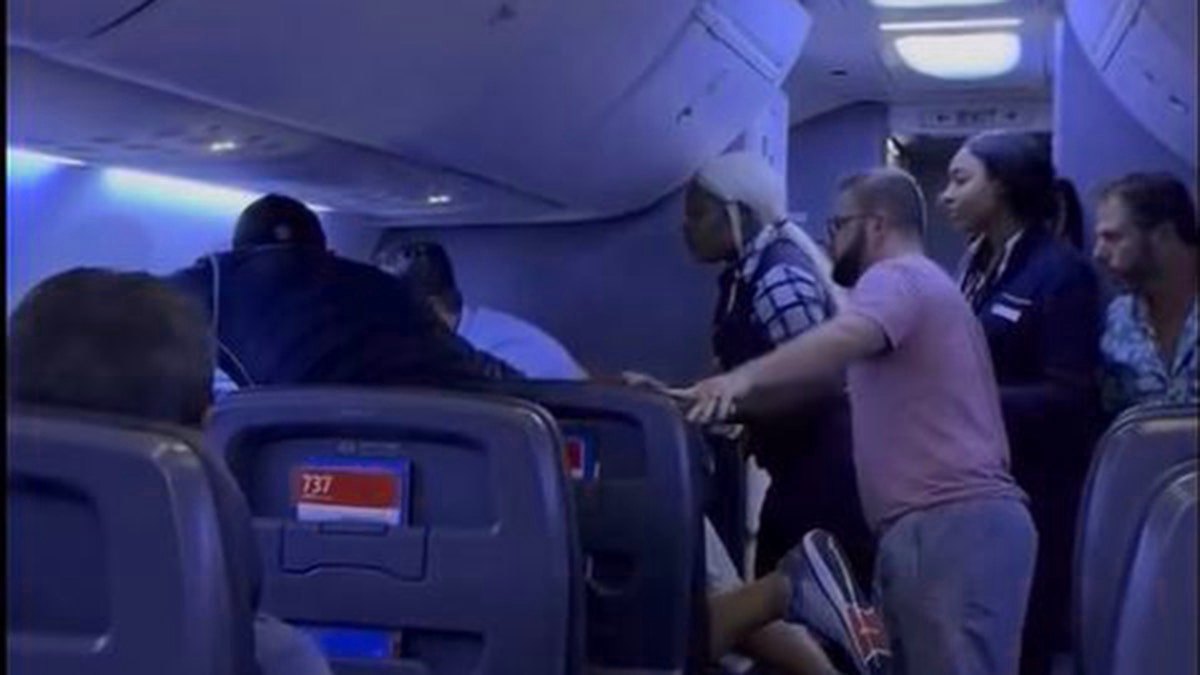
As Augustin’s behavior became increasingly violent, three male passengers took it upon themselves to intervene. Recognizing the threat he posed, they worked together to subdue him before he could cause further harm. Their actions were not only courageous but also necessary, as the flight crew was unable to manage the situation alone due to the physical aggression displayed by Augustin.
Witnesses described the scene as chaotic, with passengers tackling Augustin to the ground while he continued to resist. Rosenberg noted, “Myself and my friend were talking, and we’re like, ‘We’re going to have to take this guy down.’” This collective effort demonstrated the power of bystander intervention in crisis situations, as the passengers acted decisively to protect themselves and others.
Impact on Other Passengers
The intervention by fellow passengers had a profound impact on the overall atmosphere of the flight. While it ultimately led to the subduing of a violent individual, it also left many passengers shaken. The sight of a fellow traveler exhibiting such erratic and aggressive behavior created a lasting impression on those who witnessed it.
After Augustin was subdued, the emotional toll on passengers became evident. Many reported feeling traumatized by the experience, with some stating that the images of violence would haunt them for a long time. The incident highlighted the psychological impact that such events can have on individuals, even those who were not directly involved in the confrontation.
Consequences of the Incident
Legal Actions Against the Passenger
Following the incident, Augustin faced multiple charges, including misdemeanor battery and felony criminal property damage. After being subdued and arrested, he was taken to a local hospital for evaluation due to the ingestion of rosary beads, which he reportedly swallowed during the altercation. This bizarre detail further underscored the severity of his mental state during the incident.
However, a significant twist occurred when a “paperwork miscommunication” led to Augustin being granted bond and released shortly after his arrest. This error allowed him to return to the airport, where he boarded another flight to Atlanta. Law enforcement quickly apprehended him again upon arrival, leading to federal charges being filed against him.
Psychological Impact on Witnesses
The psychological aftermath of the incident was significant for many passengers and crew members. Witnesses reported experiencing anxiety and distress following the event, with some expressing concerns about flying in the future. The trauma of witnessing such violence can have lasting effects, as individuals process the fear and uncertainty that arose during the incident.
Passengers like Rosenberg described the experience as “very disturbing,” indicating that the memory of the event would linger long after the flight had landed. The incident serves as a stark reminder of the potential for violence in confined spaces like airplanes and the importance of mental health awareness in aviation.
Passenger’s Background and Motivations
Delange Augustin, the passenger at the center of this incident, was reportedly traveling with his sister to flee what they described as “religious attacks of a spiritual nature” in Haiti. This background adds a layer of complexity to the incident, as it raises questions about the intersection of mental health and religious beliefs.
Witnesses noted that Augustin’s sister believed in the possession narrative, which may have influenced her response to his behavior. This context highlights the challenges faced by individuals experiencing mental health crises, particularly when intertwined with deeply held beliefs. Understanding the motivations behind such actions is crucial for addressing similar incidents in the future.
Aftermath and Further Developments
In the aftermath of the incident, American Airlines faced scrutiny over its handling of the situation and the safety protocols in place for managing unruly passengers. The airline has a responsibility to ensure the safety of all passengers and crew members, and incidents like this raise important questions about how effectively they can respond to crises.
Additionally, the legal proceedings against Augustin will likely unfold over the coming months, as federal charges are pursued. The case will serve as a focal point for discussions about mental health in aviation and the need for comprehensive training for airline staff in handling similar situations.
Reflections on a Disturbing Incident
The Role of Bystanders in Crisis Situations
The actions of fellow passengers during the incident demonstrate the critical role that bystanders can play in crisis situations. Their willingness to intervene not only prevented further harm to crew members but also showcased the importance of collective action in emergencies. This incident serves as a reminder that ordinary individuals can make a significant difference when faced with unexpected challenges.
Understanding Mental Health in Aviation
The incident involving Delange Augustin raises important questions about mental health awareness in aviation. As air travel continues to be a common mode of transportation, understanding the complexities of mental health issues is essential for ensuring the safety and well-being of all passengers. Airlines must prioritize training and resources to address potential crises effectively, fostering a safer environment for everyone onboard.
In conclusion, the events of March 10, 2025, serve as a stark reminder of the unpredictable nature of air travel and the importance of preparedness in the face of crisis. The bravery of passengers who intervened, the challenges faced by airline staff, and the ongoing discussions about mental health in aviation will shape the future of air travel safety.